6 Well Plate Cell Culture: Advanced Research Platform for Precision Cell Culture Applications

Get a Free Quote

Our representative will contact you soon.
Email
Name
Company Name
Message
0/1000

6 well plate cell culture

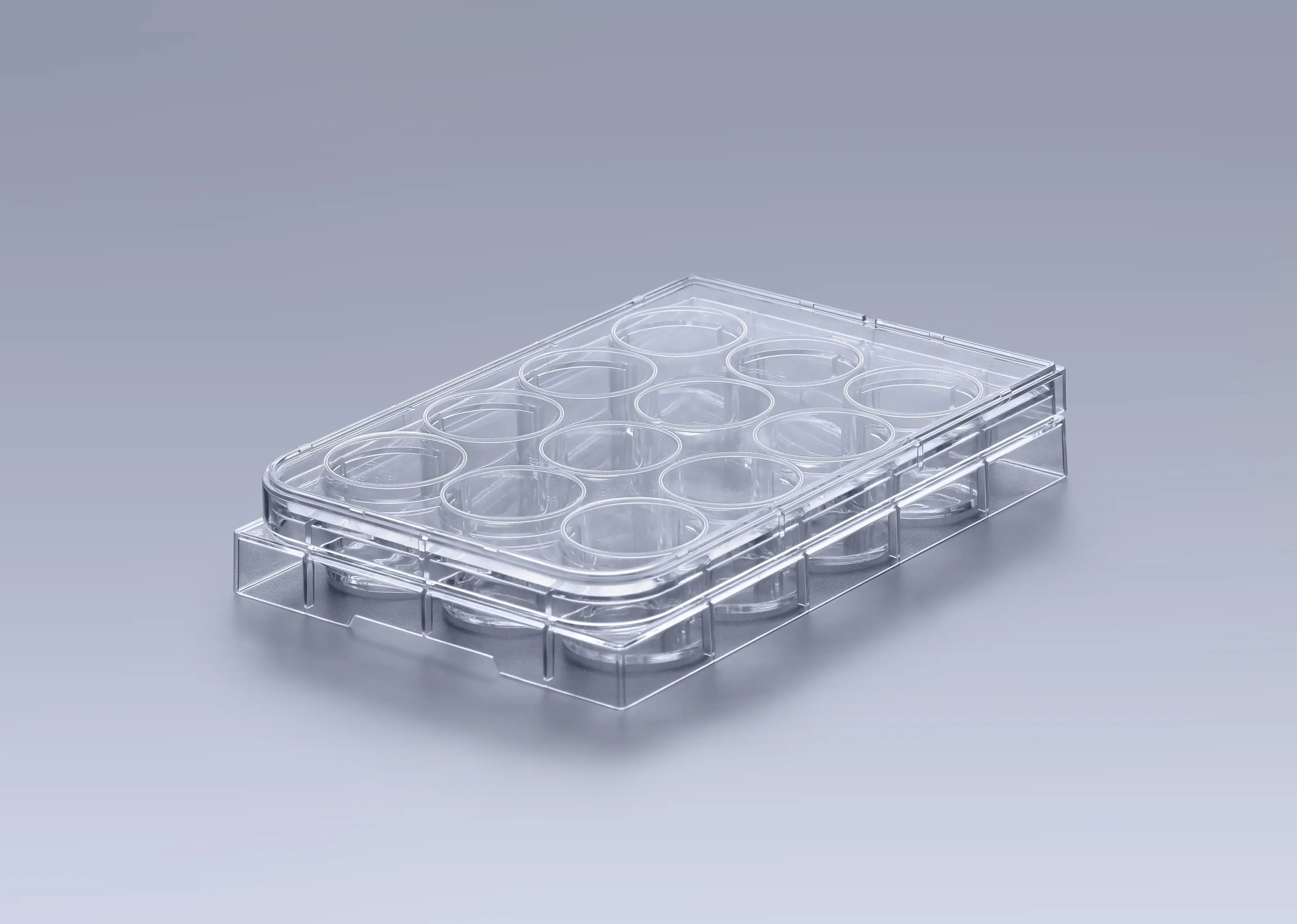
The 6 well plate cell culture represents a fundamental tool in modern laboratory research, offering researchers a versatile platform for conducting multiple experiments simultaneously. This standardized culture vessel features six individual wells, each typically measuring 35mm in diameter, providing ample space for cell growth and observation. The plate is manufactured from high-grade, optically clear polystyrene, ensuring excellent visibility for microscopic examination and imaging. Each well can accommodate approximately 1-5 mL of culture medium, making it ideal for both adherent and suspension cell cultures. The design incorporates raised well walls to minimize cross-contamination and features a lid that allows for gas exchange while maintaining sterility. These plates are particularly valuable for comparative studies, drug screening, and cell-based assays. The surface of each well can be treated with various coatings to enhance cell attachment and growth, including tissue culture treatment, poly-D-lysine, or collagen. Researchers can easily monitor cell growth, morphology, and behavior through direct microscopic observation, making these plates essential for cell biology research, drug development, and biotechnology applications.

New Products

The 6 well plate cell culture system offers numerous practical advantages that make it an indispensable tool in laboratory settings. First, its multi-well design enables researchers to conduct parallel experiments under identical conditions, significantly reducing variables and improving experimental consistency. The generous well size provides adequate space for cell growth and manipulation, making it perfect for cell expansion and long-term culture studies. Each well's capacity allows for sufficient nutrient supply and waste dilution, promoting optimal cell growth conditions. The standardized dimensions ensure compatibility with most laboratory equipment, including microscopes, plate readers, and automated handling systems. The plates are cost-effective, as they reduce the amount of reagents and materials needed compared to larger culture vessels. They also facilitate easy media changes and cell monitoring without disturbing neighboring wells. The transparent material allows for direct visualization of cell cultures, enabling researchers to assess cell health and confluence without additional manipulation. The plates are stackable for efficient incubator storage and come sterile-packed for immediate use. Their design promotes uniform temperature distribution and gas exchange, crucial for maintaining consistent culture conditions. Additionally, the plates are suitable for various applications, from basic cell maintenance to complex transfection experiments and drug screening assays. The durability of the plates ensures they maintain their integrity throughout extended experimental periods, while their disposable nature eliminates the need for time-consuming cleaning and sterilization procedures.

Tips And Tricks

How Cryotubes Protect Samples In Ultra-Low Temperature Storage

28

Oct

How Cryotubes Protect Samples In Ultra-Low Temperature Storage

Understanding the Critical Role of Cryogenic Sample Storage In modern biological and medical research, the preservation of valuable samples at ultra-low temperatures is paramount to maintaining their integrity and viability. Cryotubes have emerged as...
View More
Best Practices For Labeling And Tracking Cryogenic Vials In Freezers

28

Oct

Best Practices For Labeling And Tracking Cryogenic Vials In Freezers

Mastering Cryogenic Sample Management Through Effective Labeling Systems The success of any laboratory's cryogenic storage system hinges on its ability to accurately track and identify samples. Proper cryogenic vial labeling serves as the foundation ...
View More
How To Select The Right Cryotube Size For Laboratory Applications

28

Oct

How To Select The Right Cryotube Size For Laboratory Applications

Understanding Cryopreservation Storage Requirements Selecting the appropriate cryotube size is a critical decision that can significantly impact the success of your laboratory experiments and sample storage. Whether you're preserving cell cultures, t...
View More
How Pipette Tips Influence Accuracy In Molecular Biology Experiments

28

Oct

How Pipette Tips Influence Accuracy In Molecular Biology Experiments

Understanding the Critical Role of Pipette Tips in Laboratory Precision In the intricate world of molecular biology, the smallest details can have profound impacts on experimental outcomes. Among these crucial elements, pipette tips stand as fundamen...
View More

Get a Free Quote

Our representative will contact you soon.
Email
Name
Company Name
Message
0/1000

6 well plate cell culture

Superior Cell Visualization and Monitoring

Superior Cell Visualization and Monitoring

The 6 well plate cell culture system excels in providing researchers with exceptional cell visualization capabilities. The optically clear polystyrene construction delivers superior clarity for both phase contrast and fluorescence microscopy. The well bottom thickness is optimized at approximately 1.27mm, ensuring excellent optical properties for high-resolution imaging. This feature is particularly crucial for researchers conducting time-lapse studies or requiring detailed morphological analysis of their cultures. The flat and even growth surface eliminates optical distortions, enabling accurate cell counting and assessment of cell behavior. The wells are designed with optimal spacing to prevent optical interference between adjacent wells during microscopic examination. This superior visibility allows researchers to closely monitor cell growth patterns, detect contamination early, and make informed decisions about culture maintenance and experimental progression.
Versatile Experimental Applications

Versatile Experimental Applications

The versatility of the 6 well plate format makes it an invaluable tool for diverse research applications. Each well provides sufficient surface area for various experimental procedures, from basic cell culture to complex co-culture systems. The plates excel in supporting both adherent and suspension cell cultures, making them suitable for a wide range of cell types. Researchers can easily perform transfection experiments, drug screening assays, and cell differentiation studies within the same plate. The well size accommodates insert systems for migration and invasion assays, while the depth ensures adequate medium volume for long-term studies. This versatility extends to specialized applications such as stem cell research, tissue engineering, and viral infection studies. The plates support multiple coating options, enabling researchers to optimize growth conditions for specific cell types and experimental requirements.
Efficient Workflow and Resource Management

Efficient Workflow and Resource Management

The 6 well plate design significantly enhances laboratory workflow efficiency and resource management. The plate format allows researchers to test multiple conditions simultaneously while maintaining reasonable reagent volumes, optimizing both time and material usage. The standardized dimensions ensure compatibility with automated systems, reducing manual handling and improving reproducibility. Each well's capacity strikes an ideal balance between providing sufficient growth area and minimizing media consumption. The plates feature ergonomic design elements such as alphanumeric well identification and orientation markers, facilitating accurate sample tracking and documentation. The sturdy construction prevents warping during incubation, ensuring consistent growth conditions across all wells. This efficient design translates to reduced experimental costs, improved throughput, and more reliable results in cell culture-based research.

Get a Free Quote

Our representative will contact you soon.
Email
Name
Company Name
Message
0/1000