Professional Cell Culture Dishes: Advanced Surface Treatment for Optimal Cell Growth and Research

Get a Free Quote

Our representative will contact you soon.
Email
Name
Company Name
Message
0/1000

the cell culture dish

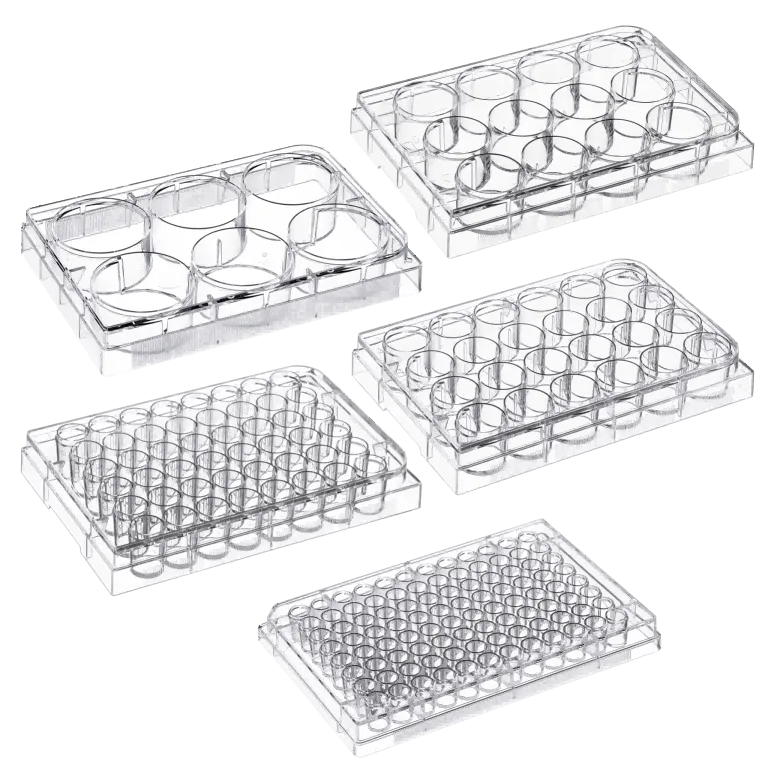
A cell culture dish represents an essential laboratory tool designed for the cultivation and study of biological cells under controlled conditions. These specialized vessels, typically made from medical-grade polystyrene, provide an optimal environment for cell growth, proliferation, and experimentation. The dishes feature a flat bottom surface that's specially treated to enhance cell adhesion and growth, while their transparent nature allows for easy microscopic observation. Available in various sizes ranging from 35mm to 150mm in diameter, these dishes accommodate different experimental needs and cell populations. The design includes a raised rim and corresponding lid that helps prevent contamination while maintaining proper gas exchange. Modern cell culture dishes often incorporate advanced surface modifications, such as plasma treatment or coating with various biological matrices, to enhance cell attachment and growth. These vessels are crucial in numerous applications, including cancer research, drug development, tissue engineering, and stem cell studies. Their standardized design ensures reproducibility across experiments, while their sterile packaging maintains the integrity of cell cultures. The dishes also feature optimal depth and surface area ratios that facilitate proper nutrient distribution and waste removal, essential for maintaining healthy cell populations. Their construction materials are carefully selected to be non-toxic and non-leaching, ensuring they don't interfere with cellular processes or experimental outcomes.

Popular Products

Cell culture dishes offer numerous practical benefits that make them indispensable in modern laboratory settings. Their transparent construction enables real-time monitoring of cell growth and morphological changes without disrupting the culture environment. The standardized design ensures consistent results across experiments, while the treated surface promotes optimal cell attachment and growth patterns. These dishes are cost-effective compared to more complex culture systems, making them accessible for various research budgets. The wide range of available sizes provides flexibility in experimental design, from small-scale studies to large-scale cell production. The dishes' construction material resists temperature changes during incubation and handling, maintaining stable conditions for cell growth. Their single-use nature eliminates cross-contamination risks and reduces cleaning and sterilization requirements. The dishes' flat bottom design allows for even cell distribution and facilitates uniform microscopic observation across the entire growth surface. The raised edges prevent media spillage during handling and transport, while the vented lids maintain proper gas exchange while protecting against contamination. These vessels are compatible with most microscopes and imaging systems, enabling various analytical techniques without transferring cells. Their stackable design optimizes incubator space usage, while their lightweight nature facilitates easy handling and storage. The dishes' surface treatment technology ensures consistent cell attachment across different lots, providing reliable experimental conditions. They also support various coating options for specialized cell culture applications, enhancing their versatility in different research contexts.

Latest News

How Cryotubes Protect Samples In Ultra-Low Temperature Storage

28

Oct

How Cryotubes Protect Samples In Ultra-Low Temperature Storage

Understanding the Critical Role of Cryogenic Sample Storage In modern biological and medical research, the preservation of valuable samples at ultra-low temperatures is paramount to maintaining their integrity and viability. Cryotubes have emerged as...
View More
How To Select The Right Cryotube Size For Laboratory Applications

28

Oct

How To Select The Right Cryotube Size For Laboratory Applications

Understanding Cryopreservation Storage Requirements Selecting the appropriate cryotube size is a critical decision that can significantly impact the success of your laboratory experiments and sample storage. Whether you're preserving cell cultures, t...
View More
How Pipette Tips Influence Accuracy In Molecular Biology Experiments

28

Oct

How Pipette Tips Influence Accuracy In Molecular Biology Experiments

Understanding the Critical Role of Pipette Tips in Laboratory Precision In the intricate world of molecular biology, the smallest details can have profound impacts on experimental outcomes. Among these crucial elements, pipette tips stand as fundamen...
View More
What To Look For When Purchasing Sterile Pipette Tips In Bulk

28

Oct

What To Look For When Purchasing Sterile Pipette Tips In Bulk

Essential Guidelines for Bulk Sterile Pipette Tip Procurement Laboratory professionals understand that sterile pipette tips are fundamental tools for accurate and contamination-free liquid handling. When purchasing these essential supplies in bulk, m...
View More

Get a Free Quote

Our representative will contact you soon.
Email
Name
Company Name
Message
0/1000

the cell culture dish

Advanced Surface Treatment Technology

Advanced Surface Treatment Technology

The cell culture dish's surface treatment technology represents a crucial advancement in cell culture methodology. The specialized surface modification process creates an optimal substrate for cell attachment and growth through plasma treatment or chemical modifications. This treatment generates a controlled surface charge and topography that mimics natural cell attachment conditions. The treatment process ensures uniform surface properties across the entire growth area, promoting consistent cell distribution and behavior. The modified surface maintains its properties throughout the culture period, providing stable conditions for long-term experiments. This technology enables successful culture of both adherent and semi-adherent cell lines, expanding the dish's application range.
Contamination Prevention Design

Contamination Prevention Design

The sophisticated contamination prevention features of cell culture dishes significantly enhance experimental reliability. The precisely engineered lid design creates a protective barrier while maintaining necessary gas exchange through carefully calibrated venting systems. The raised rim design prevents media spillage and cross-contamination between dishes during handling and incubation. The sterile packaging ensures the dishes remain contaminant-free until use, while the single-use nature eliminates the risk of residual contamination from previous experiments. The dish material resists microbial growth and prevents the absorption of potentially harmful substances that could affect cell cultures.
Optimal Viewing and Analysis Capabilities

Optimal Viewing and Analysis Capabilities

The cell culture dish's design prioritizes superior visualization and analysis capabilities. The optically clear polystyrene material provides excellent transparency for microscopic observation and imaging. The flat bottom design ensures consistent focal planes across the entire growth surface, facilitating detailed cell observation and photography. The material's optical properties remain stable under various imaging conditions, including phase contrast and fluorescence microscopy. The dishes' dimensions are standardized to fit common microscope stages and imaging systems, enabling seamless integration with analytical equipment. The transparency extends through both visible and UV spectrum ranges, supporting various imaging techniques without interference.

Get a Free Quote

Our representative will contact you soon.
Email
Name
Company Name
Message
0/1000