
 EN
EN



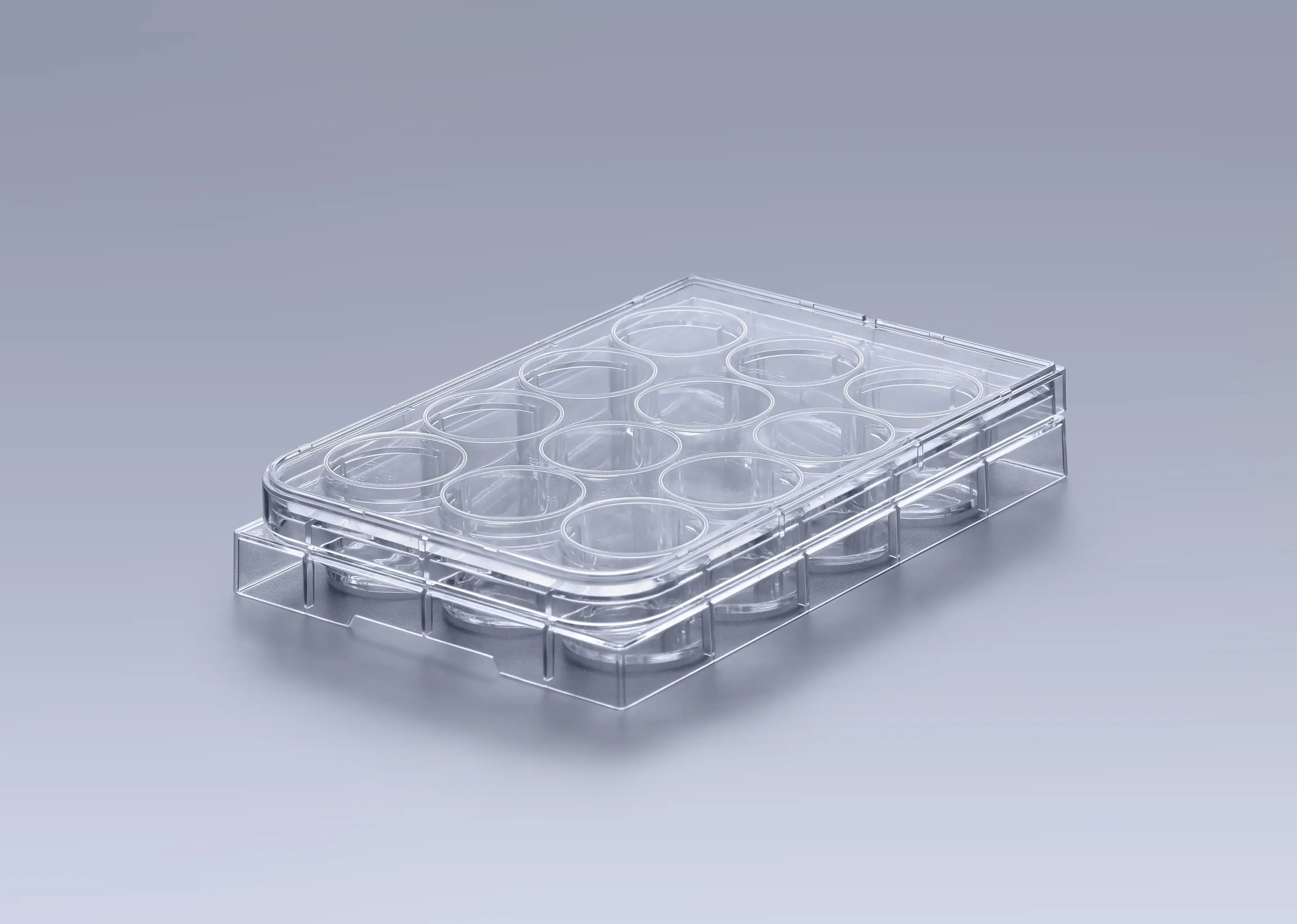
In modern life sciences and drug discovery, the ability to process hundreds or even thousands of samples simultaneously has become a fundamental requirement. well plates have emerged as the cornerstone technology enabling this capability, providing researchers with a standardized, scalable, and highly efficient platform for conducting parallel experiments. Without these precision-engineered tools, the pace of pharmaceutical research, genomics, and cellular biology would be dramatically slower, and the cost of discovery would be significantly higher.
The role of well plates in high-throughput screening (HTS) extends far beyond simple sample containment. These multi-well formats are precisely engineered to support automation, minimize reagent consumption, reduce cross-contamination, and deliver reproducible results across thousands of simultaneous assays. Understanding why well plates are so indispensable to HTS workflows requires examining their design logic, functional versatility, and the scientific demands they are specifically built to meet.
The Fundamental Role of Well Plates in High-Throughput Screening
Standardization That Enables Scale
One of the primary reasons well plates are essential to high-throughput screening is the universal standardization of their physical dimensions. The ANSI/SLAS standard defines precise footprint dimensions, well spacing, and plate height that allow well plates to integrate seamlessly with liquid handling robots, plate readers, incubators, and storage systems. This standardization means that a 96-well plate used in one laboratory is physically and functionally compatible with automated equipment used in another facility anywhere in the world.
This compatibility is not a minor convenience — it is the architectural foundation of any high-throughput operation. Without standardized well plates, every instrument, software system, and protocol would need to be individually calibrated for each vessel geometry. The result would be enormous inefficiency, elevated error rates, and prohibitive costs. Standardization transforms well plates from simple containers into a universal interface between biology and automation.
In practice, this means that a research team can design a screening campaign, purchase well plates, program their liquid handling system, and execute thousands of assays without worrying about physical incompatibility. The plate is the silent enabler of this operational fluency, and its value is felt at every step of the workflow.
Parallelization of Experimental Conditions
High-throughput screening is fundamentally about testing many conditions in parallel rather than sequentially. Well plates make this possible by providing discrete, isolated reaction vessels arranged in a compact matrix format. A single 96-well plate, for example, allows a researcher to test 96 different compounds, concentrations, or conditions in a single experimental run. A 384-well plate quadruples that capacity, and 1536-well formats push it even further.
This parallelization is what transforms screening from a slow, resource-intensive process into a genuinely high-throughput operation. Instead of running one experiment per day, a properly equipped HTS laboratory using well plates can execute tens of thousands of data points per day per researcher. The reduction in time-to-data is not just a productivity gain — it is a scientific advantage that accelerates the identification of viable candidates in drug discovery and biological research.
The geometry of well plates also supports the inclusion of positive and negative controls within each plate, ensuring that every experimental run contains its own internal reference points. This design discipline improves data quality and makes it easier to identify plate-to-plate variability, which is critical when managing large screening datasets.
Well Plate Formats and Their Screening-Specific Advantages
Selecting the Right Well Count for Your Assay
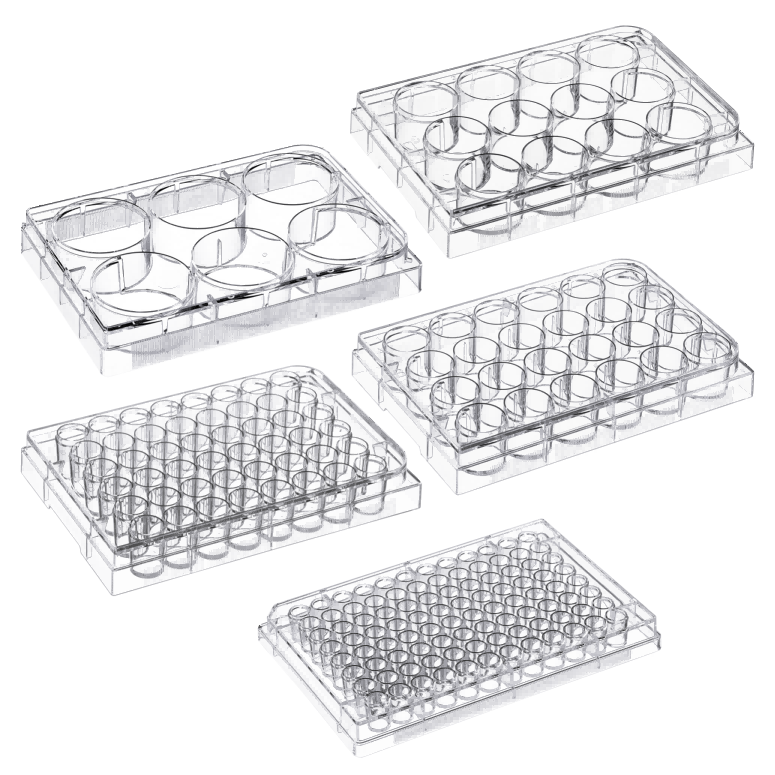
Well plates are available in several standard formats, with 6, 12, 24, 48, 96, and 384-well configurations being the most widely used in research and industry. Each format offers distinct advantages depending on the assay type, the available automation infrastructure, and the volume of samples being processed. Choosing the appropriate format is a critical decision that directly impacts throughput, cost-efficiency, and data quality.
Lower-density well plates such as 6-well and 24-well formats are typically used for assays that require larger cell populations, more media volume, or manual manipulation. These plates are commonly used in cell culture, transfection experiments, and assays where imaging of larger cell colonies is necessary. The larger well volume accommodates a wider range of biological materials without the precision liquid handling required at higher densities.
In contrast, 96-well and 384-well plates are the workhorses of automated high-throughput screening. The 96-well format has become so universally adopted that most HTS instruments and protocols are optimized around it as a baseline standard. When well plates in the 96-well format are combined with multichannel pipettes or robotic dispensing systems, a single operator can process hundreds of samples per hour with consistent accuracy.
Surface Treatment and Cell Culture Compatibility
Not all well plates are identical in their surface chemistry, and this distinction matters enormously in biological screening applications. Cell culture well plates are typically manufactured with treated surfaces designed to promote cell adhesion, spreading, and proliferation. This surface treatment, often a plasma treatment or coating with extracellular matrix proteins, transforms a plain plastic surface into a substrate that mimics physiological growth conditions.
For high-throughput cell-based assays, which represent a large proportion of modern drug discovery screening campaigns, using well plates with the correct surface treatment is not optional — it is a prerequisite for generating biologically meaningful data. Cells that do not adhere properly will exhibit abnormal morphology, altered gene expression, and unreliable responses to test compounds. The quality of the well plate surface directly determines the quality of the biological signal being measured.
Tissue culture-treated well plates are specifically designed to support mammalian cell lines under standard incubation conditions. Their consistent surface properties ensure that replicate wells in a screening plate behave identically, reducing well-to-well variability and improving the statistical power of the assay. This reproducibility is one of the core reasons why well plates designed for tissue culture applications are preferred in HTS environments over generic laboratory vessels.
Automation Compatibility and Workflow Integration
How Well Plates Enable Robotic Liquid Handling
The relationship between well plates and laboratory automation is deeply interdependent. Modern HTS facilities rely on robotic liquid handling systems to dispense nanoliter to microliter volumes of reagents, compounds, and biological materials into individual wells with high precision and speed. These robots are calibrated to interact with well plates of defined geometry, and the consistency of the plate's physical dimensions is what makes reliable automated dispensing possible.
When well plates are used with automated dispensers, the risk of human pipetting error is essentially eliminated. Robotic systems can achieve coefficient of variation values below 5% for liquid dispensing across an entire plate, a level of consistency that is nearly impossible to achieve manually over hundreds of replicates. This precision is critical in dose-response assays, where small differences in compound concentration can have significant effects on the measured biological outcome.
Furthermore, automated plate handlers can move well plates between instruments — from a liquid handler to an incubator to a plate reader — without human intervention, reducing both the time required for each assay and the risk of sample mix-up or contamination. The well plate serves as the physical token that travels through the automated workflow, carrying samples and maintaining their positional identity at every step.
Integration With Detection and Imaging Systems
Well plates are also designed to be directly compatible with a wide range of detection instruments, including fluorescence plate readers, luminescence readers, absorbance readers, and high-content imaging systems. The optical properties of the plate material — whether it is clear, white, or black — are selected based on the detection modality being used. Clear plates are used for absorbance and transmitted light imaging, white plates maximize luminescence signal, and black plates minimize background fluorescence.
This optical engineering is not incidental — it is a deliberate design feature that ensures well plates perform optimally within specific detection workflows. Using the wrong plate type for a given assay can dramatically reduce signal-to-noise ratio, leading to false negatives or unreliable data. Researchers working in HTS environments must therefore select well plates not just by their well count but by their optical, chemical, and biological compatibility with the entire assay system.
High-content imaging, which captures detailed cellular morphology data from thousands of wells per run, places particularly demanding requirements on well plates. The bottom of the plate must be optically clear and precisely flat to allow consistent focus across the imaging field. Specialty imaging plates often feature glass or optical-quality polymer bottoms to meet these requirements, and their compatibility with automated microscopy stages is essential for running large-scale phenotypic screens.
Economic and Scientific Efficiency of Well Plates in Drug Discovery
Reducing Reagent Cost Without Sacrificing Data Quality
One of the most compelling economic arguments for using well plates in high-throughput screening is the dramatic reduction in per-sample reagent cost as well density increases. Moving from a 96-well format to a 384-well format reduces the working volume per well from approximately 100–200 microliters to 25–50 microliters, and 1536-well plates operate at volumes as low as 1–10 microliters. This miniaturization directly reduces the amount of expensive reagents, cell culture media, and test compounds required per data point.
In drug discovery, where compound libraries can contain hundreds of thousands of chemical entities and each compound may be available in only limited quantities, the ability to screen at low volumes is not just economically attractive — it is operationally necessary. Well plates at high densities allow research teams to screen their entire compound collection multiple times without exhausting supply, enabling replication and orthogonal confirmation assays that strengthen the reliability of hit identification.
The cumulative cost savings from using appropriate well plates across a large screening campaign can run into hundreds of thousands of dollars, making the choice of plate format a significant factor in the overall economics of a drug discovery program. This is one reason why pharmaceutical companies and contract research organizations invest heavily in optimizing their plate formats and assay miniaturization strategies.
Reproducibility and Data Integrity Across Large Screens
Reproducibility is the scientific backbone of high-throughput screening, and well plates are central to achieving it. Because each well in a plate is manufactured to the same dimensions, surface treatment, and material specification, the experimental conditions within each well are as identical as physically possible. This uniformity is what allows researchers to attribute differences in assay signal to the biological variable being tested rather than to variation in the vessel itself.
Lot-to-lot consistency in well plate manufacturing is therefore a critical quality parameter for HTS applications. Research teams conducting long-running screening campaigns often reserve plates from a single manufacturing lot to eliminate any potential batch-to-batch variability in surface treatment, optical clarity, or material composition. This level of quality consciousness reflects just how sensitive modern HTS assays are to subtle changes in their physical environment.
When well plates deliver consistent, reproducible performance across thousands of wells and hundreds of plates, the scientific confidence in the resulting dataset increases substantially. This confidence is what allows research teams to make go/no-go decisions on drug candidates based on HTS data, and it underpins the entire value proposition of high-throughput screening as a discovery strategy.
FAQ
What makes well plates specifically suited for high-throughput screening compared to other laboratory vessels?
Well plates are designed with standardized dimensions, multi-well formats, and automation-compatible geometries that no other common laboratory vessel provides. Their layout allows hundreds to thousands of simultaneous experiments in a compact footprint, while their compatibility with robotic liquid handlers, plate readers, and incubators makes them uniquely suitable for automated, high-volume workflows. Other vessels such as flasks or tubes require individual handling and cannot be processed in parallel at the scale that well plates enable.
How do I choose between a 96-well plate and a 384-well plate for my screening assay?
The choice depends primarily on the assay volume requirements, the availability of automated liquid handling capable of working at lower volumes, and the total number of samples to be screened. A 96-well plate is more forgiving for manual or semi-automated workflows and accommodates larger sample volumes, making it suitable for assays requiring more biological material. A 384-well plate offers four times the throughput per plate run but requires precise robotic dispensing at lower volumes and is better suited for fully automated HTS environments where reagent cost reduction is also a priority.
Why is surface treatment important in cell culture well plates used for screening?
Surface treatment in cell culture well plates determines how well cells adhere to, spread across, and proliferate on the plastic surface. Without appropriate treatment, many mammalian cell types will not attach properly, leading to poor cell health, abnormal biology, and unreliable assay signals. Tissue culture-treated well plates have modified surface chemistry that mimics physiological substrates, ensuring cells behave normally throughout the screening experiment and that assay results reflect genuine biological responses rather than artifacts of poor cell culture conditions.
Can well plates be reused across multiple screening experiments?
In most high-throughput screening applications, well plates are used as single-use consumables rather than being reused. This is because reuse introduces risks of cross-contamination between experiments, degradation of surface treatment that affects cell behavior, residual compound carryover that corrupts results, and physical damage that reduces compatibility with automated equipment. The use of single-use well plates is considered best practice in HTS environments where data integrity and reproducibility are paramount, and the per-plate cost is generally justified by the value of the data generated.
Table of Contents
- The Fundamental Role of Well Plates in High-Throughput Screening
- Well Plate Formats and Their Screening-Specific Advantages
- Automation Compatibility and Workflow Integration
- Economic and Scientific Efficiency of Well Plates in Drug Discovery
-
FAQ
- What makes well plates specifically suited for high-throughput screening compared to other laboratory vessels?
- How do I choose between a 96-well plate and a 384-well plate for my screening assay?
- Why is surface treatment important in cell culture well plates used for screening?
- Can well plates be reused across multiple screening experiments?