
 EN
EN



In modern biochemical research, well plates serve as a foundational tool for conducting both enzyme and cell-based assays at scale. These compact, standardized formats allow scientists to run dozens or even hundreds of simultaneous reactions within a single plate, saving time, reducing reagent consumption, and enabling reliable data comparison across conditions. The precision and consistency offered by well plates have made them indispensable in drug discovery, diagnostics, and life science research. Understanding how well plates function within these assay types helps laboratories select the right format and optimize experimental outcomes.
The versatility of well plates extends across a wide range of assay applications. From measuring enzymatic activity with colorimetric substrates to culturing live cells under controlled conditions, well plates provide the structural uniformity and surface compatibility needed for high-quality data generation. As assay demands grow more complex, the design and material properties of well plates have evolved to meet increasingly specific requirements. This article explores the critical role that well plates play in enzyme assays, cell-based assays, and the broader laboratory ecosystem.
Well Plates in Enzyme-Based Assay Applications
How Well Plates Enable Enzymatic Measurement
Enzyme-based assays rely on well plates to deliver consistent well geometry, controlled volumes, and optical clarity that allow accurate detection of enzymatic reactions. In assays such as ELISA, enzyme activity is measured through colorimetric, fluorescent, or luminescent signals generated within each well. The flat-bottom design of well plates is particularly important here, as it ensures uniform light path length during absorbance readings, which directly affects data accuracy. Well plates with high optical transparency minimize background noise and improve the signal-to-noise ratio in enzyme detection workflows.
Well plates used in enzyme assays must also be compatible with the binding characteristics of antibodies, antigens, and other biomolecules. High-binding well plates promote strong adsorption of capture molecules onto well surfaces, making them ideal for sandwich ELISA and competitive assay formats. In contrast, low-binding well plates reduce non-specific adsorption, which is preferred in assays where background signal control is critical. Selecting the appropriate surface chemistry in well plates is therefore a technical decision that significantly influences assay sensitivity and reproducibility.
Format Selection for Enzyme Assay Throughput
The format of well plates directly affects throughput in enzyme-based assay workflows. Standard 96-well plates remain the most widely used format for enzyme assays due to their balance between sample capacity and ease of handling. However, laboratories requiring higher throughput increasingly use 384-well plates or even 1536-well plates, both of which demand greater precision in liquid handling. Well plates in these high-density formats reduce reagent costs per sample and allow automation-compatible workflows that support large-scale screening programs. Choosing the right well plate format depends on the sample volume, detection method, and instrumentation available in the laboratory.
Well Plates in Cell-Based Assay Workflows
Surface Properties That Support Cell Culture
Cell-based assays require well plates with surface properties that support cell attachment, growth, and function. Tissue culture-treated well plates undergo plasma treatment or chemical modification to create a hydrophilic surface that promotes cell adhesion. This surface treatment is critical for adherent cell lines, where poor attachment leads to inconsistent cell morphology and unreliable assay results. Well plates used in cell-based assays must maintain sterility and be free of cytotoxic residues that could interfere with cell viability or gene expression.
Beyond standard tissue culture treatment, well plates are also available with specialized coatings such as collagen, fibronectin, or poly-D-lysine. These coatings mimic the extracellular matrix and support the culture of primary cells or neurons that require specific adhesion signals. Well plates with ultra-low attachment surfaces, on the other hand, are used to culture suspension cells or to form three-dimensional spheroids for more physiologically relevant assay models. The surface engineering of well plates is therefore a defining factor in the quality and translatability of cell-based assay data.
Well Plate Design and Cell-Based Detection Methods
Detection in cell-based assays often involves fluorescence imaging, luminescence readings, or absorbance-based viability measurements, each placing different demands on well plate design. For fluorescence microscopy or high-content imaging, well plates with thin, optically clear bottoms made from glass or specialized polymers are preferred because they reduce focal distance issues and improve image resolution. For standard plate reader-based assays such as cell viability or cytotoxicity measurements, well plates with consistent well depth and flat bottoms ensure reproducible signal detection. The well plate format must align with the chosen detection platform to avoid systematic measurement errors.
Well plates used in cell-based assays also need to support the timescale of the experiment. Longer assays requiring multi-day incubation demand well plates with secure lids that minimize evaporation and contamination. Evaporation in edge wells is a common issue in cell-based assays, and well plates designed with condensation-reducing lid geometry help maintain consistent volume and osmolarity across all wells. These seemingly small design features in well plates can have a significant impact on data variability and experimental reproducibility.
Key Considerations When Choosing Well Plates for Assays
Material, Color, and Volume Compatibility
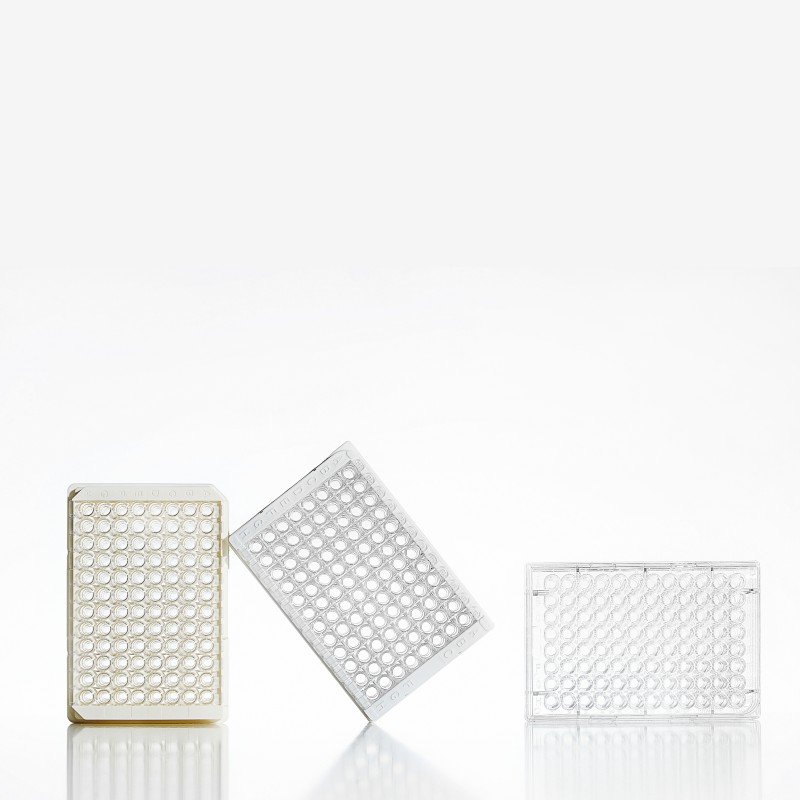
The material composition of well plates is a primary consideration for both enzyme and cell-based assays. Polystyrene is the most common material due to its optical clarity, moldability, and compatibility with standard reagents. For assays involving organic solvents or aggressive chemicals, well plates made from polypropylene offer superior chemical resistance. The color of well plates also matters: white well plates amplify luminescent signals, black well plates reduce fluorescence background, and clear well plates are best suited for absorbance-based measurements. Matching well plate color to the detection chemistry is a straightforward but important optimization step.
Volume compatibility is another practical consideration when selecting well plates. Standard 96-well plates typically accommodate 100 to 300 microliters per well, while high-density formats such as 384-well plates work with volumes as low as 10 to 50 microliters. Well plates must be matched to the liquid handling capabilities of the laboratory, whether manual pipetting or automated dispensing systems are used. Consistent well volume capacity in well plates reduces variability caused by overfilling or underfilling, both of which compromise assay data integrity.
Automation and Standardization Benefits
One of the strongest advantages of well plates in modern assay workflows is their compatibility with laboratory automation. Well plates conform to standardized footprint dimensions defined by the Society for Laboratory Automation and Screening, allowing them to integrate seamlessly with robotic liquid handlers, plate washers, and plate readers. This standardization means that well plates can move across instruments without manual reconfiguration, which supports high-throughput screening operations. Automation-ready well plates reduce human handling errors and enable consistent, reproducible assay conditions across large experimental batches. For laboratories scaling up their assay capacity, well plates that are automation-compatible represent a critical infrastructure investment.
FAQ
What types of well plates are best for ELISA assays?
For ELISA assays, high-binding well plates made from polystyrene with flat-bottom well geometry are most commonly recommended. These well plates promote strong protein adsorption and provide a uniform optical path for absorbance detection. The choice between clear, white, or black well plates depends on the specific detection method being used in the assay.
Can well plates be reused between assays?
Well plates are generally designed for single use to prevent cross-contamination and ensure consistent surface properties for each assay. Reusing well plates risks residual binding of previous samples or reagents, which can produce false signals and compromise assay accuracy. For both enzyme and cell-based assays, using fresh well plates for each experiment is strongly advised.
How do I reduce edge effects in well plates during cell-based assays?
Edge effects in well plates occur due to differential evaporation rates between outer and inner wells during incubation. To minimize this, laboratories can use well plates with evaporation-reducing lids, incubate plates inside a humidified chamber, or fill outer edge wells with phosphate-buffered saline rather than experimental samples. Selecting well plates specifically engineered with condensation-control lid designs also significantly reduces edge-effect variability in long-duration cell-based assays.