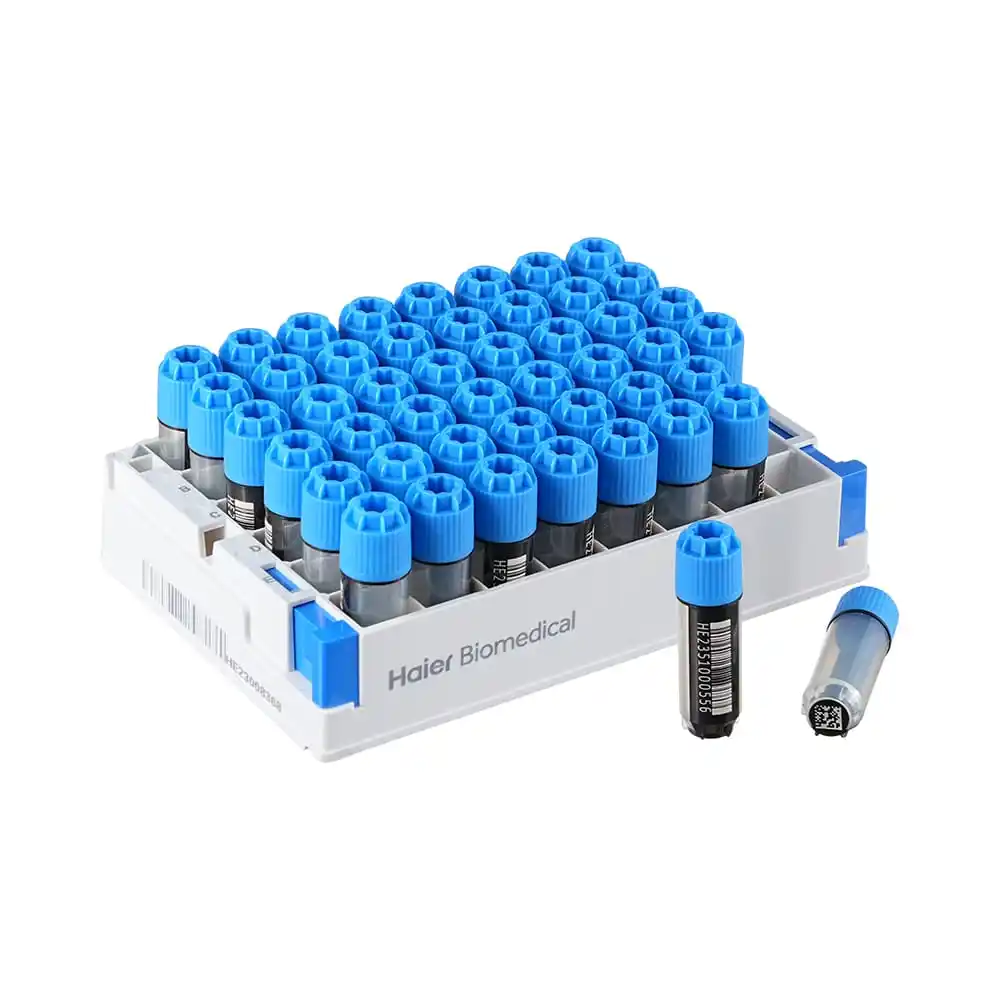
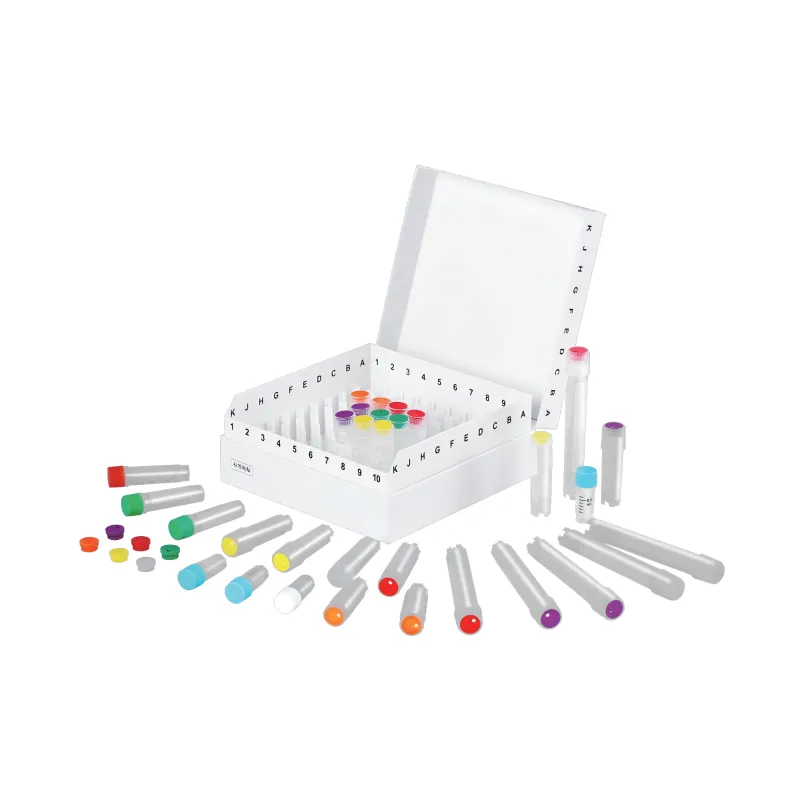
Multi Layer Cell Culture Flask

Get a Free Quote

Our representative will contact you soon.
Email
Name
Company Name
Message
0/1000

multi layer cell culture flask

A multi layer cell culture flask represents a revolutionary advancement in laboratory biotechnology, designed to maximize cell growth efficiency within minimal laboratory space. This innovative multi layer cell culture flask features multiple stacked compartments that enable researchers to cultivate significantly larger quantities of cells simultaneously compared to traditional single-layer alternatives. Each layer functions independently while maintaining optimal environmental conditions, making the multi layer cell culture flask an indispensable tool for pharmaceutical research, vaccine development, and tissue engineering applications. The primary function of a multi layer cell culture flask involves providing controlled environments where cells can proliferate under precise conditions. The multi layer cell culture flask incorporates advanced gas exchange systems, temperature regulation, and nutrient distribution mechanisms across all layers. Technological features include specialized membrane designs that facilitate oxygen and carbon dioxide transfer, integrated monitoring systems for pH and osmolarity levels, and stackable configurations that accommodate various flask sizes. Applications of the multi layer cell culture flask span multiple scientific disciplines. Researchers utilize the multi layer cell culture flask in monoclonal antibody production, stem cell expansion, and viral propagation studies. The design significantly reduces operational costs while improving reproducibility and consistency in cell culture experiments, making it essential for both academic institutions and commercial biotech operations.

New Product Releases

The multi layer cell culture flask delivers substantial practical benefits that transform laboratory operations and research productivity. The most significant advantage involves space efficiency, allowing researchers to cultivate multiple cell batches within the same footprint as traditional single-layer vessels. This space-saving design directly reduces laboratory overhead and enables facilities to expand research capacity without costly infrastructure expansion. Operational benefits of utilizing a multi layer cell culture flask include simplified batch management and streamlined maintenance protocols. Each compartment maintains independent environmental conditions, allowing simultaneous cultivation of different cell lines without cross-contamination risks. This operational flexibility accelerates research timelines and enables parallel experimentation essential for comprehensive studies. The multi layer cell culture flask proves exceptionally suitable for large-scale cell production applications. Pharmaceutical companies leverage these flasks for manufacturing biologics, while research institutions employ them for generating sufficient cell volumes for complex experiments. The standardized layered design ensures consistent results across multiple batches, improving data reliability and regulatory compliance. From a financial perspective, implementing a multi layer cell culture flask reduces per-unit production costs significantly. The efficient use of growth media, reduced energy consumption per cultured cell, and decreased facility overhead translate into measurable cost savings. Decision-useful context reveals that organizations adopting multi layer cell culture flask technology report 40-60% improvements in production capacity while maintaining quality standards. These quantifiable advantages make the multi layer cell culture flask an economically strategic investment for facilities prioritizing both growth and sustainability in their research operations.

Tips And Tricks

How Do Erlenmeyer Flasks Support Chemical Reactions and Mixing in Labs

15

May

How Do Erlenmeyer Flasks Support Chemical Reactions and Mixing in Labs

The Erlenmeyer flask is one of the most iconic and practically useful pieces of glassware found in any chemistry or life sciences laboratory. Its distinctive conical body, narrow neck, and flat base make it instantly recognizable, but beyond its fami...
View More
How Media Bottles Support Safe Storage Of Laboratory Solutions

03

Jun

How Media Bottles Support Safe Storage Of Laboratory Solutions

In laboratory environments, the safe and reliable storage of solutions is not a secondary concern — it is a foundational requirement that directly impacts experimental accuracy, reagent integrity, and personnel safety. media bottles have emerge...
View More
Best Practices For Preventing Leakage In Sample Tubes

16

Jul

Best Practices For Preventing Leakage In Sample Tubes

Leakage in sample tubes is one of the most persistent challenges in laboratory and biobanking environments. When sample tubes fail to maintain a proper seal, the consequences extend beyond simple inconvenience — contamination, specimen loss, and comp...
View More
How Can Sample Tubes Improve Efficiency in Medical and Research Labs

31

Aug

How Can Sample Tubes Improve Efficiency in Medical and Research Labs

In both medical facilities and scientific research environments, the ability to handle specimens quickly, accurately, and safely is central to productive operations. sample tubes play a foundational role in this process, serving as the primary vessel...
View More

Get a Free Quote

Our representative will contact you soon.
Email
Name
Company Name
Message
0/1000

multi layer cell culture flask

Maximum Space Utilization and Production Capacity

Maximum Space Utilization and Production Capacity

The multi layer cell culture flask maximizes laboratory productivity by stacking multiple cultivation chambers vertically, creating unprecedented cell production capacity within confined spaces. This architectural advantage means researchers can cultivate substantially larger cell volumes compared to conventional flat-sided culture vessels. Facilities implementing the multi layer cell culture flask experience dramatic improvements in throughput, enabling simultaneous cultivation of multiple distinct cell lines or biological specimens. The compact vertical design permits efficient organization of laboratory benches while eliminating the need for expanded storage infrastructure. Research teams discover that converting from traditional methods to the multi layer cell culture flask substantially amplifies their experimental output without requiring renovations or additional equipment investments. This efficiency gains prove particularly valuable for biotech companies facing space constraints in urban research facilities.
Superior Environmental Control and Cell Health Management

Superior Environmental Control and Cell Health Management

The multi layer cell culture flask incorporates sophisticated environmental management systems that maintain optimal conditions across every cultivation layer. Advanced gas exchange membranes embedded throughout the multi layer cell culture flask design enable precise oxygen and carbon dioxide regulation essential for healthy cell development. Temperature uniformity across all compartments within the multi layer cell culture flask prevents localized thermal variations that compromise cell viability. Integrated pH buffering systems and nutrient distribution mechanisms ensure each layer receives consistent nourishment, resulting in superior cell quality and higher viability rates. Researchers report that cells cultured within a multi layer cell culture flask demonstrate improved consistency compared to traditional methods, yielding more reliable experimental data. The sophisticated monitoring capabilities embedded in modern multi layer cell culture flask designs provide real-time feedback, enabling prompt adjustments to environmental parameters.
Cost Efficiency and Enhanced Research Scalability

Cost Efficiency and Enhanced Research Scalability

Implementing a multi layer cell culture flask delivers immediate and substantial cost reductions across multiple operational dimensions. The multi layer cell culture flask reduces per-unit growth media consumption through efficient nutrient distribution, lowering ongoing material expenses significantly. Energy requirements per cultured cell decrease markedly when utilizing the multi layer cell culture flask compared to managing multiple individual vessels, translating to reduced utility costs. Laboratory personnel efficiency improves dramatically since the multi layer cell culture flask consolidates management responsibilities across multiple batches into single oversight operations. Facility overhead allocation per cultured cell decreases substantially, improving the overall economic profile of research initiatives. Organizations transitioning to the multi layer cell culture flask experience measurable returns on investment within 18-24 months, making this technology particularly attractive for budget-conscious institutions. The financial advantages, combined with improved scalability potential, position the multi layer cell culture flask as strategically essential for long-term laboratory development.

Get a Free Quote

Our representative will contact you soon.
Email
Name
Company Name
Message
0/1000