Well Cell Culture Plate

Get a Free Quote

Our representative will contact you soon.
Email
Name
Company Name
Message
0/1000

well cell culture plate

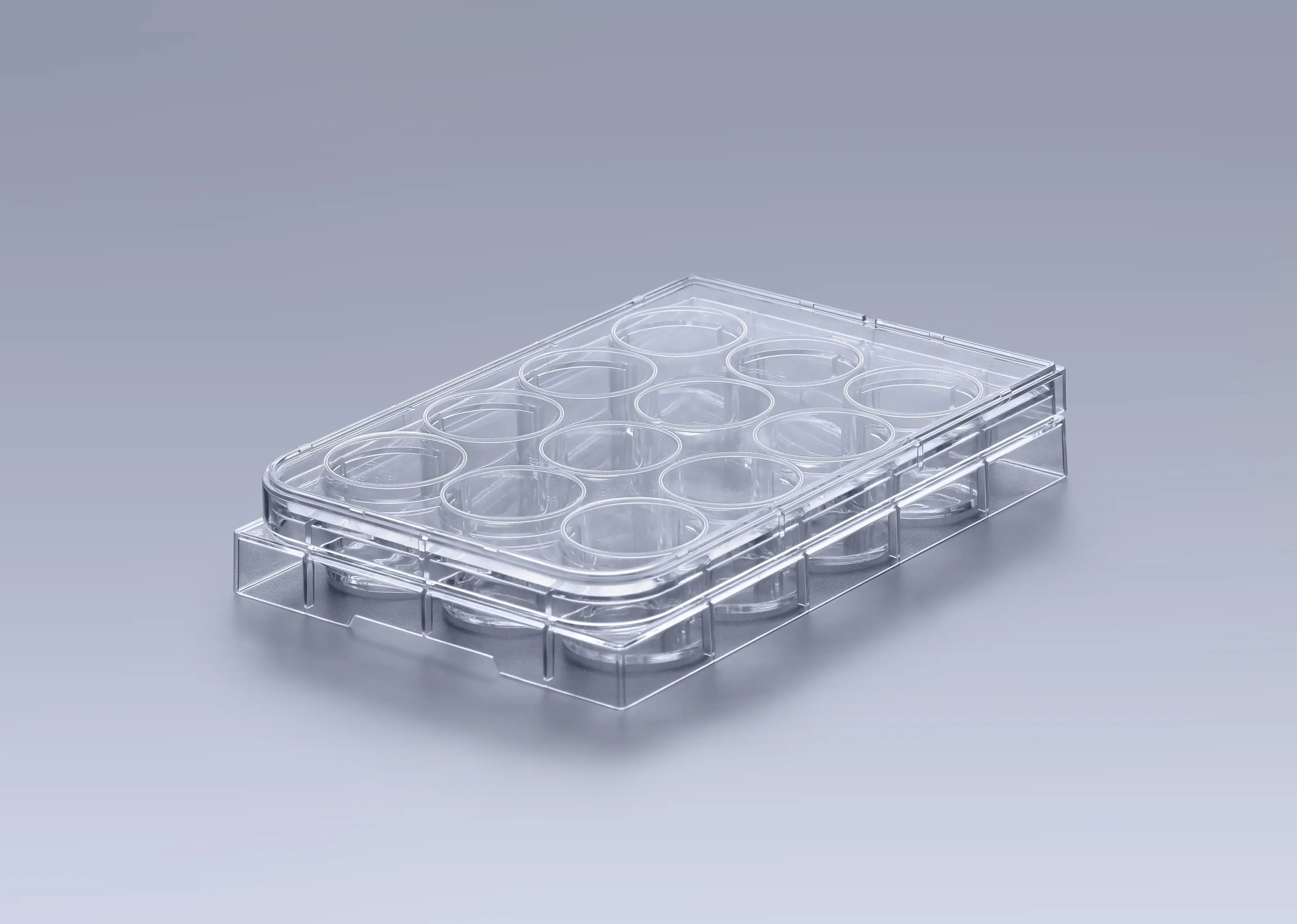
A well cell culture plate represents a specialized laboratory tool designed to support cellular research and biological experimentation. This essential equipment consists of multiple compartments, or wells, arranged in organized grids on a flat plastic or glass surface. The well cell culture plate serves as a container where cells can grow, develop, and interact in controlled environments. The primary function of a well cell culture plate is to facilitate cell growth and observation. Researchers use this plate to culture various cell types, from bacteria to mammalian cells, enabling comprehensive biological studies. The well cell culture plate typically features standardized dimensions, making it compatible with automated laboratory equipment and microscopy systems. Technologically, the well cell culture plate incorporates several advanced features. The surface treatment ensures optimal cell adhesion and growth characteristics. Many designs include transparent bottoms for direct microscopic observation without sample transfer. The wells are manufactured with precision to maintain consistent volumes and uniform experimental conditions across all compartments. Applications for a well cell culture plate span numerous scientific fields. Pharmaceutical researchers use it for drug testing and toxicity assessment. Molecular biologists employ it for gene expression studies. Immunologists utilize the well cell culture plate for antibody production and vaccine development. Medical diagnostics laboratories rely on it for pathogen detection. Industrial biotechnology facilities implement it in large-scale production processes. The versatility of the well cell culture plate makes it indispensable in modern scientific research, clinical diagnostics, and pharmaceutical development across countless laboratories worldwide.

New Products

A well cell culture plate offers remarkable practical benefits that make it an exceptional choice for laboratories of all sizes. First, the well cell culture plate provides outstanding cost efficiency. By accommodating multiple samples simultaneously within a single unit, this plate reduces material expenses while maximizing experimental throughput. Researchers can conduct multiple tests, comparisons, and replicates without purchasing numerous individual containers, significantly lowering overall project costs. Operationally, the well cell culture plate streamlines laboratory workflows dramatically. Its standardized design integrates seamlessly with automated liquid handlers, plate readers, and robotic systems, saving valuable technician time. Scientists can process dozens or hundreds of samples in the time previously required for a handful. The well cell culture plate eliminates manual transfer complications and contamination risks associated with moving samples between containers. The application suitability of a well cell culture plate is exceptionally broad. Whether conducting screening assays, toxicology studies, or production-scale fermentation, this versatile equipment adapts to diverse requirements. The well cell culture plate accommodates different cell types, media volumes, and culture durations, providing researchers flexibility rarely found in single-purpose laboratory equipment. Decision-useful context shows that the well cell culture plate delivers measurable return on investment. Laboratories reduce expenses on supplies, labor, and equipment maintenance while accelerating research timelines. The transparency options enable real-time monitoring without disrupting cultures, and the sterile surfaces minimize contamination concerns. For commercial enterprises, the well cell culture plate reduces product development cycles, bringing innovations to market faster. Academic institutions benefit from enhanced research capacity without proportional budget increases, while clinical laboratories improve diagnostic accuracy and throughput, making the well cell culture plate an investment that delivers value across every sector.

Tips And Tricks

How Can Serum Bottles Ensure Safe Storage of Biological Samples

03

Jun

How Can Serum Bottles Ensure Safe Storage of Biological Samples

When working with biological samples in laboratory, clinical, or research environments, the choice of storage container is never trivial. serum bottles have become a trusted solution across a wide range of life science applications, offering a combin...
View More
Why Well Plates Are Essential Tools For High-Throughput Screening

03

Jun

Why Well Plates Are Essential Tools For High-Throughput Screening

In modern life sciences and drug discovery, the ability to process hundreds or even thousands of samples simultaneously has become a fundamental requirement. well plates have emerged as the cornerstone technology enabling this capability, providing r...
View More
Why Freezer Racks Improve Laboratory Storage Efficiency

10

Jul

Why Freezer Racks Improve Laboratory Storage Efficiency

In modern laboratory environments, efficient sample management is not just a convenience — it is a scientific necessity. Freezer racks play a central role in organizing biological samples, reagents, and critical materials stored inside ultra-low temp...
View More
How Can Sample Tubes Improve Efficiency in Medical and Research Labs

31

Aug

How Can Sample Tubes Improve Efficiency in Medical and Research Labs

In both medical facilities and scientific research environments, the ability to handle specimens quickly, accurately, and safely is central to productive operations. sample tubes play a foundational role in this process, serving as the primary vessel...
View More

Get a Free Quote

Our representative will contact you soon.
Email
Name
Company Name
Message
0/1000

well cell culture plate

Versatile Multi-Well Design for Diverse Applications

Versatile Multi-Well Design for Diverse Applications

The well cell culture plate features an innovative multi-well configuration that transforms how researchers approach experimental design. Each plate contains numerous individual wells, typically ranging from 6 to 384 compartments depending on the model selected. This versatile design permits simultaneous cultivation of different cell types, treatment variations, or experimental conditions within a single, compact unit. Scientists appreciate the flexibility this offers, as they can run parallel experiments without requiring multiple separate containers or workspace expansion. The well cell culture plate accommodates various cell culture densities and volumes, making it suitable for preliminary studies through industrial-scale production. Researchers can compare control samples against treated specimens, test multiple drug concentrations, or evaluate different culture conditions simultaneously. The organized grid arrangement ensures consistent spacing, enabling automated processing and standardized data collection. This thoughtful design reduces experimental variability while improving reproducibility across research projects, ultimately supporting more reliable scientific conclusions and faster hypothesis validation.
Advanced Surface Treatment for Optimal Cell Growth

Advanced Surface Treatment for Optimal Cell Growth

The well cell culture plate incorporates sophisticated surface treatments that directly enhance cell growth and viability. Manufacturers apply specialized coatings designed to promote cell adhesion while maintaining sterile conditions essential for successful cultures. These treatments ensure cells attach appropriately to well surfaces without damaging cellular structures, a critical factor in maintaining healthy, representative cultures throughout experimental periods. The surface technology used in modern well cell culture plate production includes hydrophilic modifications that optimize nutrient distribution and waste removal around growing cells. These enhancements create microenvironments closely mimicking natural cellular conditions, resulting in more authentic experimental data. Different well cell culture plate variations offer specific surface treatments tailored to particular cell types, whether for adherent cells requiring strong substrate attachment or suspension cultures needing minimal interference. This technological sophistication ensures that regardless of research objectives, scientists achieve consistent, reproducible results that accurately reflect actual biological phenomena, supporting more confident research conclusions.
Compatibility with Automated Laboratory Systems

Compatibility with Automated Laboratory Systems

The well cell culture plate demonstrates exceptional integration capabilities with modern laboratory automation equipment. Its standardized dimensions and design enable seamless interfacing with automated liquid handlers, plate readers, incubators, and imaging systems. This compatibility eliminates manual sample handling requirements, significantly reducing human error while accelerating experimental throughput dramatically. Researchers using a well cell culture plate can implement high-throughput screening protocols that would be impractical using traditional methods. Automated plate handlers transfer samples between stations without disrupting sensitive cultures or introducing contamination risks. Specialized plate readers quickly analyze results across hundreds of wells simultaneously, generating comprehensive data sets in minutes. The well cell culture plate's standardized spacing and dimension specifications ensure it functions reliably across different manufacturer equipment, providing laboratory directors exceptional flexibility in equipment selection and system expansion. This technological synergy transforms the well cell culture plate into the centerpiece of modern automated research facilities, enabling productivity levels that fundamentally exceed manual approaches.

Get a Free Quote

Our representative will contact you soon.
Email
Name
Company Name
Message
0/1000