
 EN
EN



Modern molecular biology laboratories increasingly rely on high-throughput PCR analysis to meet demanding research and diagnostic requirements. The choice of consumables significantly impacts workflow efficiency, data quality, and overall laboratory productivity. Among the various PCR tube formats available, PCR strips have emerged as the preferred solution for laboratories conducting large-scale amplification studies. These specialized consumables offer unique advantages that address the specific challenges associated with processing multiple samples simultaneously while maintaining the precision and reliability required for critical applications.
The evolution of PCR technology has consistently focused on improving throughput capabilities without compromising analytical accuracy. PCR strips represent a significant advancement in this direction, combining the individual tube benefits with enhanced processing efficiency. Laboratory professionals working with genetic analysis, diagnostic testing, and research applications have recognized the substantial operational benefits that PCR strips provide compared to traditional single tubes or full plate formats.
Enhanced Laboratory Workflow Efficiency
Streamlined Sample Processing
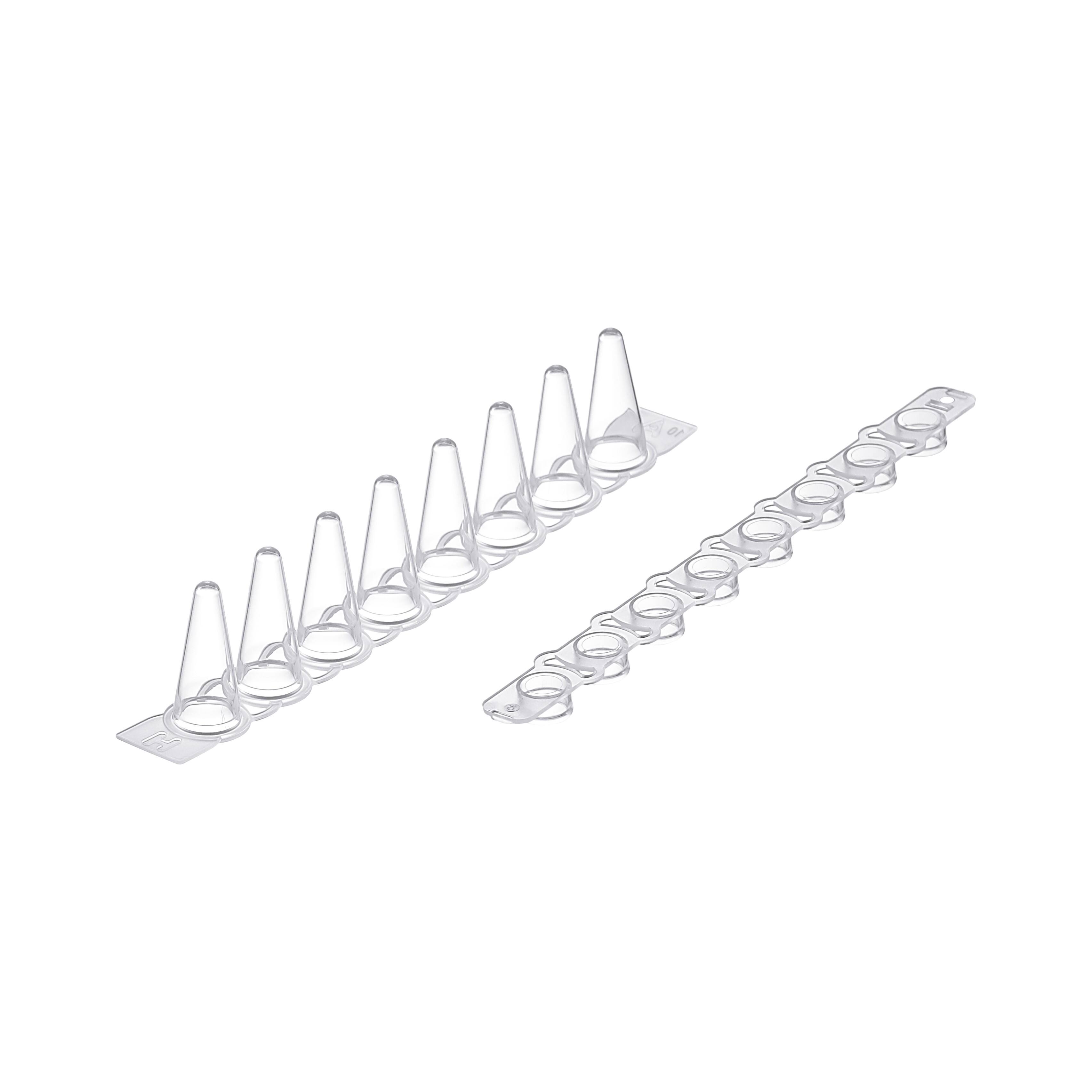
PCR strips fundamentally transform sample processing workflows by enabling laboratories to handle multiple samples as integrated units while maintaining individual sample integrity. This design allows researchers to process samples in convenient groups of eight, which aligns perfectly with multichannel pipetting systems commonly used in molecular biology laboratories. The ability to handle multiple samples simultaneously reduces manual handling time and minimizes the potential for sample mix-ups or contamination events.
The modular nature of PCR strips provides exceptional flexibility in experimental design and execution. Laboratories can easily adapt their sample processing protocols to accommodate varying batch sizes without the constraints imposed by full 96-well plates. This adaptability proves particularly valuable when working with precious samples or conducting pilot studies where full plate capacity is unnecessary. The strip format allows researchers to optimize their PCR runs based on actual sample numbers rather than being forced to fill entire plates.
Reduced Contamination Risk
Contamination prevention remains a critical concern in PCR applications, and PCR strips offer superior protection compared to traditional tube formats. The connected design of strip tubes creates a more controlled environment during sample preparation and thermal cycling. Each strip can be handled as a single unit, reducing the number of individual tube manipulations required and consequently decreasing opportunities for cross-contamination between samples.
The manufacturing process for high-quality PCR strips incorporates stringent quality controls that ensure each tube meets the same specifications for cleanliness and performance. The integrated cap design provides secure sealing for individual samples while maintaining easy access for sample loading and retrieval. This balanced approach to accessibility and security helps laboratories maintain the sample integrity essential for reliable PCR results.
Superior Thermal Performance Characteristics
Optimized Heat Transfer Properties
The thermal performance of PCR strips represents a significant advantage for high-throughput applications requiring precise temperature control. The thin-walled construction typical of quality PCR strips facilitates rapid and uniform heat transfer during thermal cycling, ensuring that all samples within a strip experience identical temperature profiles. This uniformity is crucial for maintaining consistent amplification efficiency across all samples in a batch.
Advanced PCR strips utilize specialized polymer materials that optimize thermal conductivity while maintaining structural integrity throughout multiple thermal cycles. The material properties ensure minimal thermal lag between the heating block and sample contents, enabling faster cycling times and improved overall assay performance. Laboratories conducting time-sensitive analyses particularly benefit from these enhanced thermal characteristics, as they can complete PCR runs more quickly without sacrificing data quality.
Temperature Uniformity Across Samples
Achieving consistent temperature distribution across multiple samples is essential for reliable PCR results, and PCR strips excel in this critical performance area. The connected design of strip tubes creates a thermal mass that helps stabilize temperature fluctuations and ensures uniform heating across all positions. This thermal stability is particularly important when processing samples with varying volumes or compositions that might otherwise exhibit different thermal responses.
Quality PCR strips undergo rigorous testing to verify temperature uniformity specifications across all tube positions. Manufacturers employ sophisticated thermal imaging and monitoring systems to validate that each tube within a strip maintains the target temperature within narrow tolerances throughout the entire thermal cycling process. This level of temperature control consistency enables laboratories to achieve reproducible results across large sample batches.
Cost-Effectiveness and Resource Optimization
Reduced Consumable Costs
The economic advantages of PCR strips become particularly apparent in high-throughput laboratory environments where consumable costs represent a significant operational expense. PCR strips typically offer better cost-per-sample ratios compared to individual tubes, especially when purchasing in bulk quantities. The reduced packaging requirements and manufacturing efficiencies associated with strip production enable suppliers to offer more competitive pricing structures.
Beyond the direct cost savings, PCR strips contribute to overall laboratory cost reduction through improved operational efficiency. The time savings achieved through streamlined sample handling translates to reduced labor costs and increased laboratory productivity. Facilities processing hundreds or thousands of samples annually can realize substantial cost benefits by adopting PCR strips as their standard consumable format for routine analyses.
Inventory Management Benefits
PCR strips simplify inventory management processes by providing a single consumable format that accommodates various batch sizes and experimental requirements. Laboratories can maintain smaller inventory quantities while still having the flexibility to handle diverse project needs. The standardized format reduces the complexity of procurement planning and helps minimize storage requirements compared to maintaining multiple tube formats.
The predictable consumption patterns associated with PCR strips enable more accurate forecasting of consumable needs and help prevent both stockouts and excessive inventory accumulation. Laboratory managers can more easily track usage patterns and optimize ordering schedules to maintain adequate supplies while minimizing carrying costs. This improved inventory control contributes to overall laboratory efficiency and budget management.
Compatibility with Modern Laboratory Equipment
Automated System Integration
Modern laboratories increasingly rely on automated systems to handle high-throughput PCR applications, and PCR strips are specifically designed to integrate seamlessly with these advanced platforms. The standardized dimensions and spacing of PCR strips ensure compatibility with automated liquid handling systems, thermal cyclers, and sample processing equipment commonly found in contemporary molecular biology facilities.
The modular design of PCR strips allows for flexible integration with various automation platforms without requiring extensive equipment modifications or specialized adapters. This compatibility extends to both sample preparation automation and post-PCR processing systems, enabling laboratories to create fully integrated workflows that minimize manual intervention while maximizing throughput capabilities.
Multichannel Pipetting Advantages
The eight-tube configuration of standard PCR strips aligns perfectly with multichannel pipette systems, enabling efficient parallel processing of samples and reagents. This compatibility allows laboratory technicians to perform simultaneous operations across all tubes in a strip, significantly reducing the time required for sample preparation and reagent addition. The precision and accuracy achievable with multichannel pipetting systems help ensure consistent sample preparation across all positions.
The spacing and positioning of tubes within PCR strips conform to international standards that ensure compatibility with pipetting systems from various manufacturers. This standardization provides laboratories with flexibility in equipment selection while maintaining confidence that their chosen PCR strips will work effectively with their existing or planned pipetting infrastructure.
Quality Control and Reproducibility
Consistent Manufacturing Standards
High-quality PCR strips are manufactured under strict quality control protocols that ensure consistent performance across all products. The manufacturing process typically involves advanced injection molding techniques that produce tubes with uniform wall thickness, precise dimensions, and consistent material properties. These manufacturing standards are essential for achieving the reproducible results required in critical research and diagnostic applications.
Quality PCR strips undergo comprehensive testing protocols that validate their performance characteristics, including thermal properties, chemical compatibility, and contamination levels. Manufacturers typically provide certificates of analysis that document the specific performance parameters of each production lot, enabling laboratories to maintain detailed quality records and ensure traceability for regulatory compliance requirements.
Batch-to-Batch Consistency
Maintaining consistent performance across different production batches is crucial for laboratories conducting long-term studies or routine diagnostic testing. Quality PCR strips manufacturers implement statistical process controls that monitor key performance parameters throughout the production process, ensuring that each batch meets the same stringent specifications. This consistency enables laboratories to use PCR strips from different lots without concerns about performance variations that could affect experimental results.
The documentation and traceability systems associated with quality PCR strips provide laboratories with the information needed to track performance trends and identify any potential issues before they impact critical applications. This level of quality assurance is particularly important for laboratories operating under regulatory oversight where batch-to-batch consistency must be documented and verified.
Applications in High-Throughput Analysis
Genetic Research Applications
PCR strips have become indispensable tools in genetic research applications where high sample throughput and reliable results are essential. Research projects involving population studies, genetic diversity analyses, and comparative genomics often require processing hundreds or thousands of samples with consistent protocols. The efficiency and reliability of PCR strips make them ideal for these demanding applications where both speed and accuracy are critical success factors.
The flexibility of PCR strips allows researchers to adapt their experimental designs to accommodate varying sample sizes and processing requirements without compromising data quality. This adaptability is particularly valuable in collaborative research projects where different laboratories may be contributing samples or when pilot studies need to be scaled up to larger sample populations.
Diagnostic Testing Workflows
Clinical and diagnostic laboratories rely heavily on PCR strips for routine testing applications where rapid turnaround times and reliable results are essential. The efficiency gains achieved through PCR strips enable diagnostic facilities to process larger sample volumes while maintaining the quality standards required for clinical decision-making. The reduced contamination risk associated with PCR strips is particularly important in diagnostic applications where false results can have significant consequences.
The cost-effectiveness of PCR strips makes them attractive for diagnostic laboratories operating under tight budget constraints while still needing to maintain high testing volumes. The operational efficiencies achieved through PCR strips can help laboratories improve their financial performance while expanding their testing capabilities to serve more patients or clients.
FAQ
What are the main advantages of PCR strips over individual tubes
PCR strips offer several key advantages including improved workflow efficiency through reduced handling time, better thermal uniformity across samples, lower contamination risk due to integrated design, and cost savings through bulk processing capabilities. The eight-tube format also provides perfect compatibility with multichannel pipetting systems, enabling faster and more accurate sample preparation compared to individual tube handling.
How do PCR strips maintain temperature consistency across all tubes
PCR strips achieve excellent temperature consistency through their connected design which creates a unified thermal mass that stabilizes temperature fluctuations. The thin-walled construction and specialized polymer materials optimize heat transfer, while the manufacturing process ensures uniform wall thickness across all tubes. Quality control testing validates that temperature variations between tubes remain within narrow tolerances throughout thermal cycling.
Can PCR strips be used with automated laboratory systems
Yes, PCR strips are specifically designed for compatibility with automated laboratory systems including liquid handling robots, thermal cyclers, and sample processing equipment. The standardized dimensions and spacing conform to international standards, ensuring seamless integration with automation platforms from various manufacturers without requiring specialized adapters or equipment modifications.
What quality control measures ensure PCR strips perform consistently
Quality PCR strips undergo rigorous manufacturing controls including statistical process monitoring, batch testing for thermal properties and contamination levels, and dimensional verification. Manufacturers provide certificates of analysis documenting performance parameters, while traceability systems enable tracking of batch-to-batch consistency. These quality measures ensure reliable performance across different production lots and extended storage periods.