
 EN
EN



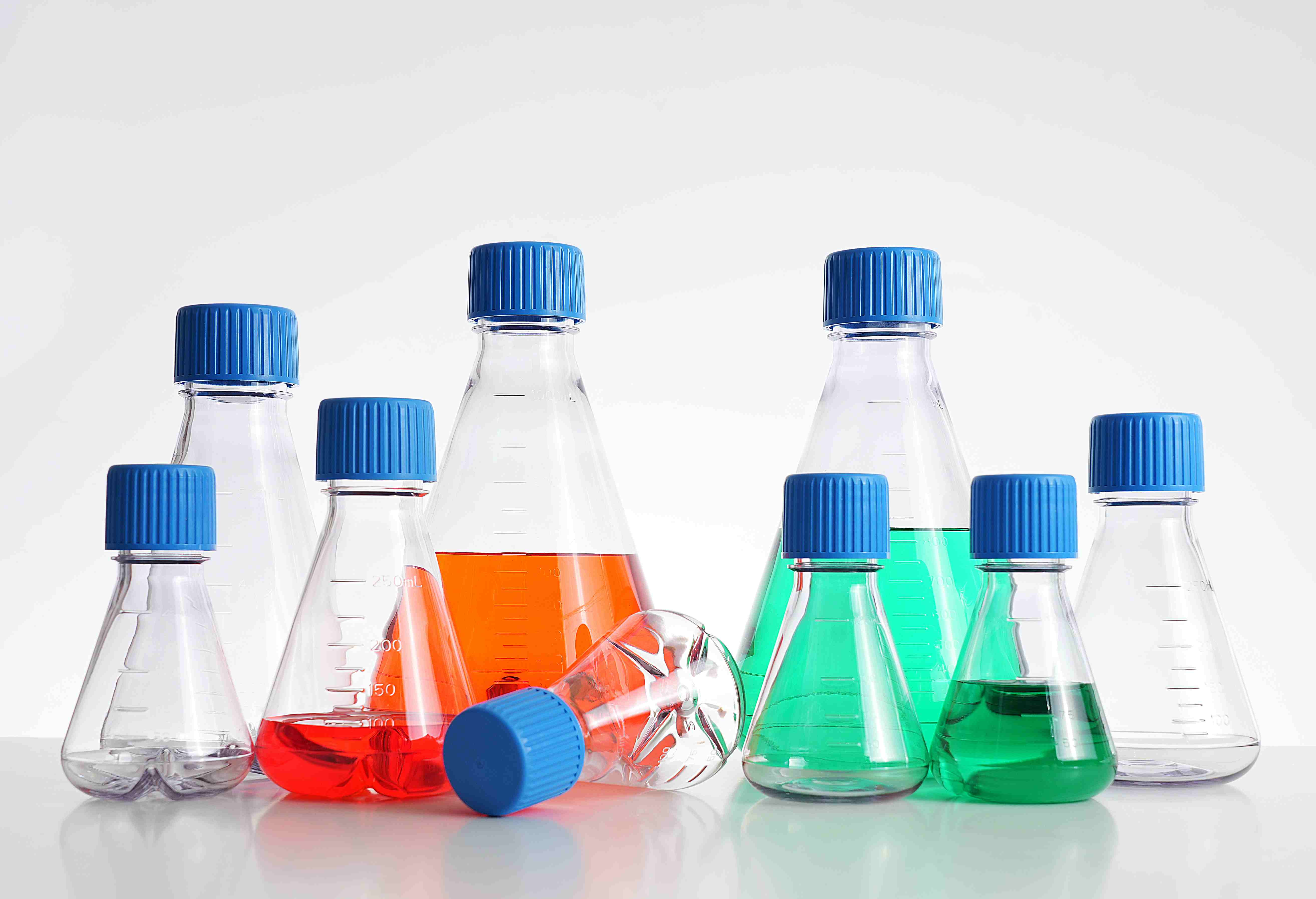
In modern cell biology and biopharmaceutical research, the choice of culture vessel profoundly impacts cell viability, growth consistency, and experimental reproducibility. Among the many options available in laboratory settings, the Erlenmeyer flask has emerged as one of the most trusted and widely adopted tools for cell suspension cultures. Its distinctive conical shape, material versatility, and functional design make it uniquely suited to the dynamic requirements of suspension-based cell growth—a fact recognized by researchers across academic, clinical, and industrial environments alike.
Understanding why the Erlenmeyer flask continues to dominate cell suspension culture workflows requires a closer look at the biological demands of suspension cultures, the mechanical behavior of swirling liquid, and the material science behind today's most advanced laboratory vessels. This article explores the core reasons behind this widespread adoption, examining geometry, aeration, scalability, and practical handling advantages that make the Erlenmeyer flask an irreplaceable asset in cell culture laboratories worldwide.

The Unique Geometry That Supports Suspension Cell Growth
Conical Shape and Swirling Dynamics
The defining feature of any Erlenmeyer flask is its conical body—wide at the base and narrowing toward a cylindrical neck. This geometry is not merely aesthetic; it is functionally critical for cell suspension cultures. When placed on an orbital shaker, the conical form promotes a controlled circular motion of the culture medium, creating a vortex that keeps cells uniformly distributed throughout the liquid volume. Unlike cylindrical vessels, where liquid movement can be uneven and create dead zones, the tapered walls of an Erlenmeyer flask guide fluid in a predictable rotational pattern.
This consistent swirling ensures that suspended cells remain in constant contact with fresh nutrients and dissolved oxygen, both of which are essential for healthy proliferation. Without adequate mixing, suspension cells tend to aggregate and settle, leading to oxygen gradients, nutrient depletion near cell clusters, and ultimately reduced culture performance. The Erlenmeyer flask geometry naturally counteracts these problems by maintaining a homogeneous culture environment at relatively low shaking speeds, reducing mechanical stress on sensitive mammalian cells.
Additionally, the broad base provides a generous surface area at the liquid interface, which enhances gas exchange between the culture medium and the headspace above it. This is particularly important in aerobic cell cultures where dissolved oxygen levels must remain within a narrow range to support metabolic activity without inducing oxidative stress. The design elegantly balances mixing efficiency with cell protection.
Neck Design and Contamination Prevention
The narrow neck of the Erlenmeyer flask serves a dual function that is especially valuable in sterile cell culture applications. First, it restricts the opening through which airborne contaminants can enter, significantly reducing contamination risk compared to wider-mouthed vessels. Second, it accommodates a variety of closures—from vented caps and membrane stoppers to breathable filters—that allow gas exchange while maintaining a sterile barrier.
In cell suspension cultures, maintaining sterility throughout the growth cycle is non-negotiable. Any microbial contamination can rapidly overwhelm mammalian cells, which grow far more slowly than bacteria or fungi. The neck geometry of the Erlenmeyer flask makes it inherently more protective than open beakers or wide-neck bottles, and its compatibility with standard autoclavable closures means it fits seamlessly into established sterile processing workflows.
Modern versions of the Erlenmeyer flask often incorporate specialized vent caps with hydrophobic membranes. These allow CO2 and O2 to diffuse freely while blocking liquid splash-back and microbial ingress. This feature is critical during orbital shaking, where vigorous mixing could otherwise cause liquid to contact the cap and introduce sterility risks.
Aeration Efficiency in Orbital Shaker Systems
Headspace Volume and Oxygen Transfer Rate
One of the most scientifically significant reasons for the widespread use of the Erlenmeyer flask in cell suspension cultures is its highly favorable headspace-to-liquid ratio. Researchers typically fill an Erlenmeyer flask to only 10–20% of its total nominal volume when culturing suspension cells. This leaves a large headspace volume above the liquid, which acts as an oxygen reservoir that continuously replenishes dissolved oxygen consumed by metabolically active cells.
Oxygen transfer rate (OTR) is one of the most critical parameters in suspension cell culture, directly affecting cell density ceilings and productivity. The combination of a large headspace and vigorous orbital mixing in an Erlenmeyer flask creates an efficient gas-liquid interface that supports OTR values sufficient for even moderately high-density cultures. For Chinese Hamster Ovary (CHO) cells and other industrially relevant mammalian cell lines, this balance allows productive research-scale cultures without the need for active sparging systems.
Studies in bioprocess engineering have confirmed that the oxygen kLa values achievable in a standard Erlenmeyer flask on an orbital shaker are competitive with those in small stirred-tank bioreactors operating at equivalent scales. This makes the Erlenmeyer flask an effective bridge between small laboratory culture flasks and larger bioreactor systems during process development.
Shaking Parameters and Cell-Friendly Mixing
Suspension cell cultures, particularly mammalian cells, are highly sensitive to hydrodynamic shear forces. Turbulent mixing or excessive agitation can damage cell membranes, disrupt cell division, and reduce viability. One reason the Erlenmeyer flask is so widely favored is that orbital shaking at moderate speeds—typically between 80 and 150 RPM depending on vessel size—generates sufficient mixing for oxygen and nutrient distribution without exposing cells to damaging shear stress.
The physics of orbital motion in an Erlenmeyer flask produce a relatively gentle, laminar-dominated swirling pattern rather than the intense turbulence associated with impeller-driven bioreactors. This characteristic makes the Erlenmeyer flask ideal for fragile cell types including primary cells, stem cell-derived lines, and virus-producing cell lines used in vaccine manufacturing. Researchers can optimize growth conditions by adjusting shaking speed, orbital diameter, and fill volume without needing complex instrumentation.
Furthermore, the predictability of fluid dynamics in a given Erlenmeyer flask size means that mixing conditions are highly reproducible from experiment to experiment. Reproducibility is a cornerstone of good laboratory practice, and the straightforward scalability of shaking parameters across different flask volumes supports method transfer and process scale-up with minimal additional development effort.
Material Options and Their Impact on Cell Culture Performance
Polycarbonate and PETG Erlenmeyer Flasks
Historically, borosilicate glass was the material of choice for the Erlenmeyer flask in research settings. While glass offers excellent chemical resistance and optical clarity, the emergence of high-performance polymers has opened new possibilities that better suit the demands of modern cell suspension cultures. Polycarbonate (PC) and polyethylene terephthalate glycol-modified (PETG) Erlenmeyer flask variants have become increasingly popular because they combine the functional advantages of glass with improved safety, lighter weight, and greater disposability.
PC Erlenmeyer flasks are valued for their exceptional optical clarity, which allows direct visual inspection of culture status without opening the flask. They also exhibit high impact resistance, making them significantly safer than glass in environments where breakage could lead to cell culture loss or exposure hazard. PETG variants offer excellent gas barrier properties, low extractables, and compatibility with common sterilization methods including gamma irradiation, making them well-suited for single-use cell culture applications in GMP environments.
For researchers and bioprocess engineers selecting a Erlenmeyer flask for suspension culture work, material choice should align with the specific cell type, culture duration, sterilization method, and whether reuse or single-use workflows are preferred. Both PC and PETG options provide low protein binding surfaces and favorable cell compatibility profiles that support high-quality suspension culture results.
Surface Treatment and Cell Compatibility
A critical consideration in cell suspension cultures is that cells must remain in suspension and must not adhere to the vessel walls. Some cell lines have adhesion tendencies that can complicate suspension culture workflows. The Erlenmeyer flask made from modern polymers like PC and PETG typically features surfaces with low non-specific binding characteristics, reducing the likelihood of unwanted cell attachment during culture.
In contrast to tissue culture-treated flasks designed to promote adhesion, the standard Erlenmeyer flask surface is intentionally non-binding, which is precisely what suspension cultures require. This ensures that cells remain freely floating and exposed to the full nutrient and oxygen supply in the liquid phase, rather than forming a restricted monolayer on the vessel wall. For cell lines like hybridomas, insect cells, or adapted CHO cells, this property is fundamental to achieving the high cell densities required for productive bioprocesses.
Researchers transitioning from glass to polymer-based Erlenmeyer flasks generally find that culture performance is maintained or improved, with the added benefits of reduced cleaning burdens, elimination of glass breakage risks, and flexibility for single-use sterile manufacturing strategies that reduce cross-contamination risk between batches.
Scalability and Process Development Advantages
Volume Range and Scale-Up Logic
One of the most practical strengths of the Erlenmeyer flask in cell suspension culture is the breadth of volume sizes available. From 50 mL to 5,000 mL and beyond, the Erlenmeyer flask format supports a logical progression of culture scales that mirrors the stages of typical bioprocess development. A researcher can begin with a 125 mL Erlenmeyer flask for initial cell line adaptation, progress to 500 mL and 1,000 mL formats for seed expansion, and move to 2,000–5,000 mL vessels for production-scale suspension cultures—all within the same vessel family.
This volumetric continuity reduces the number of process variables that change during scale-up. Because the geometry and mixing dynamics of the Erlenmeyer flask are well-characterized across sizes, researchers can apply dimensionless scaling rules to predict culture behavior at larger volumes with reasonable confidence. This is a significant advantage in biopharmaceutical development, where reducing scale-up failures and accelerating process transfer timelines has direct commercial value.
The ability to run multiple Erlenmeyer flasks simultaneously on a single orbital shaker platform also supports parallel experimentation. Cell line screening, media optimization, and feeding strategy development can all be conducted in parallel using arrays of Erlenmeyer flasks, generating multi-condition datasets efficiently and cost-effectively compared to fully instrumented bioreactor systems at equivalent scales.
Integration With Downstream Bioprocessing
The Erlenmeyer flask is not only a cell culture vessel—it is an integral component of the broader upstream bioprocessing workflow. After suspension cultures are grown to target density in Erlenmeyer flasks, the harvest step typically involves aseptic transfer to centrifuge tubes, spin filters, or directly into bioreactor inoculation lines. The narrow neck and standardized dimensions of the Erlenmeyer flask facilitate clean, controlled pours and connections with standard tubing sets and aseptic connectors.
In inoculum train development for large-scale bioreactor production, the Erlenmeyer flask stage often represents the critical N-2 or N-1 stage immediately before bioreactor inoculation. Consistent cell quality at this stage is essential because any variability introduced here propagates through the entire production cycle. The reliability and reproducibility of the Erlenmeyer flask culture format make it a trusted workhorse for this high-stakes role in the manufacturing process.
For organizations operating under Good Manufacturing Practice (GMP) guidelines, the availability of pre-sterilized, single-use Erlenmeyer flask formats simplifies documentation and quality assurance requirements. Single-use vessels eliminate the validation burden associated with cleaning and re-sterilization cycles, which is an important consideration in regulated biopharmaceutical manufacturing environments.
FAQ
Why is the Erlenmeyer flask preferred over other vessel shapes for suspension cultures?
The conical geometry of the Erlenmeyer flask promotes efficient orbital mixing when placed on a shaker platform, keeping cells evenly suspended and maximizing oxygen transfer from the headspace to the culture medium. Its narrow neck reduces contamination risk while accommodating vented closures for gas exchange. These design features together make it more effective than cylindrical bottles or wide-neck flasks for suspension cell culture applications.
What fill volume should be used in an Erlenmeyer flask for cell suspension cultures?
As a general guideline, suspension cultures in an Erlenmeyer flask should occupy approximately 10–20% of the nominal flask volume. For example, a 500 mL Erlenmeyer flask would typically contain 50–100 mL of culture medium. This fill level ensures an adequate headspace volume for oxygen transfer and allows vigorous orbital mixing without liquid contacting the cap, which is essential for maintaining sterility and sufficient aeration.
Can an Erlenmeyer flask be used for both mammalian and insect cell suspension cultures?
Yes, the Erlenmeyer flask is compatible with both mammalian and insect cell suspension cultures, though optimal shaking speeds and fill volumes differ between cell types. Insect cells such as Sf9 and High Five cells are generally more robust to shear forces than mammalian cells and can tolerate slightly higher agitation rates. In both cases, the non-binding surface of a standard Erlenmeyer flask and its efficient mixing dynamics support productive suspension culture growth when parameters are properly optimized.
What is the advantage of using single-use Erlenmeyer flasks in biopharmaceutical manufacturing?
Single-use Erlenmeyer flasks, particularly those made from PC or PETG and supplied pre-sterilized, eliminate the need for cleaning validation, autoclaving cycles, and residual contamination testing between runs. This reduces preparation time, simplifies compliance with GMP documentation requirements, and lowers the risk of cross-contamination between different cell lines or production campaigns. For organizations working with multiple cell lines or running frequent batch changeovers, the operational efficiency gains from single-use Erlenmeyer flask formats can be substantial.
Table of Contents
- The Unique Geometry That Supports Suspension Cell Growth
- Aeration Efficiency in Orbital Shaker Systems
- Material Options and Their Impact on Cell Culture Performance
- Scalability and Process Development Advantages
-
FAQ
- Why is the Erlenmeyer flask preferred over other vessel shapes for suspension cultures?
- What fill volume should be used in an Erlenmeyer flask for cell suspension cultures?
- Can an Erlenmeyer flask be used for both mammalian and insect cell suspension cultures?
- What is the advantage of using single-use Erlenmeyer flasks in biopharmaceutical manufacturing?