
 EN
EN



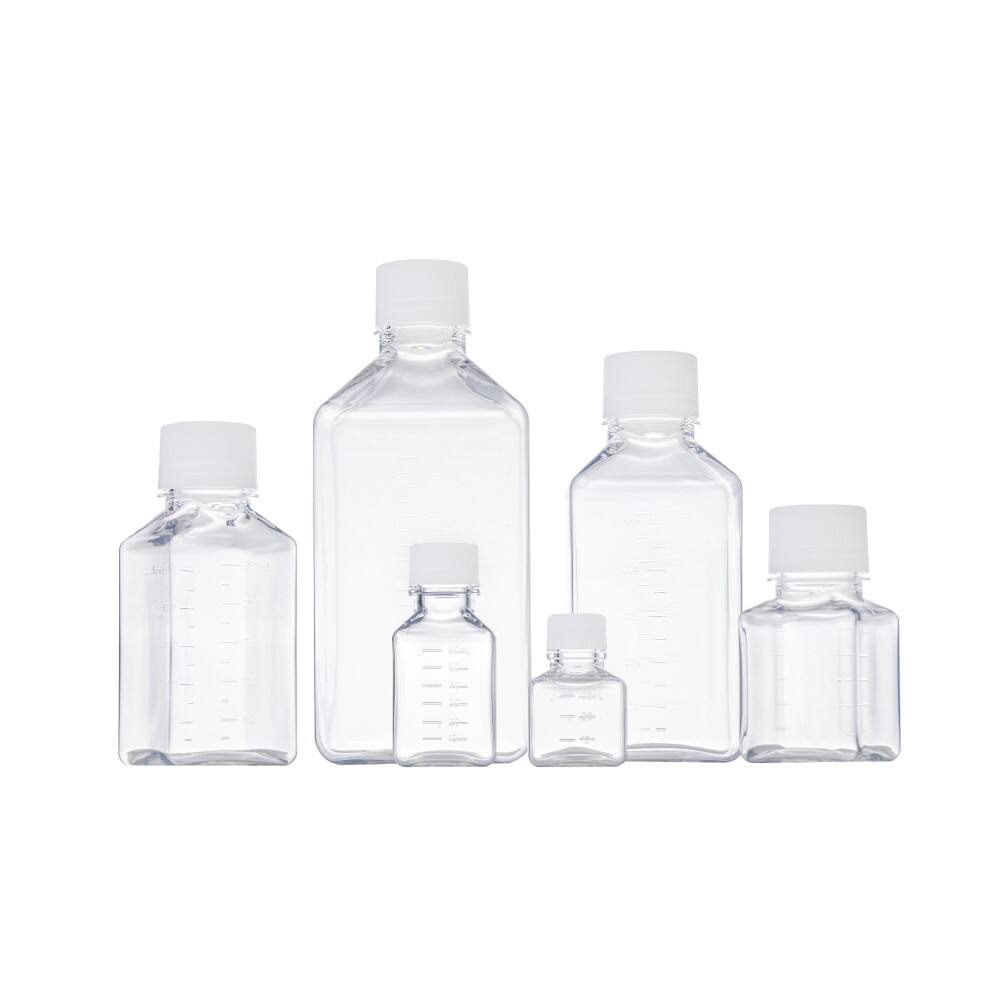
Efficient laboratory storage is never accidental. For researchers, lab managers, and procurement specialists working in life sciences, biotechnology, or pharmaceutical environments, the physical organization of reagents, buffers, and biological samples directly affects workflow speed, contamination risk, and operational cost. Among the many variables in storage optimization, the size and type of containers in use play a larger role than most teams realize. media bottles come in a range of volumes precisely because no single size fits every application — and using the wrong size creates waste, clutter, and inefficiency across every shelf, refrigerator, and biosafety cabinet in the lab.
This guide explains how to systematically approach storage optimization by matching media bottles of specific volumes — commonly 30 ml, 60 ml, 125 ml, 500 ml, and 1000 ml — to the actual demands of each task in your facility. The logic is practical and grounded in the realities of daily lab operations, covering everything from reagent preparation frequency to cold storage footprint. By the end, you will have a clear framework for deciding which size media bottles belong where, and why that decision matters more than it might initially seem.
Understanding Volume-to-Task Matching in Laboratory Storage
Why Container Volume Is a Storage Decision, Not Just a Volume Decision
Most laboratories accumulate media bottles reactively — ordering whatever size is convenient or lowest in cost at the time of purchase. This approach creates a chaotic storage environment where oversized containers occupy prime shelf space, undersized containers require frequent refills, and mismatched inventories slow down daily operations. Treating container volume as a deliberate storage decision changes the entire dynamic.
When you match the volume of media bottles to the scale at which reagents or culture media are actually consumed, you reduce the number of open containers in circulation at any given time. Fewer open containers means less risk of contamination, less evaporation loss, and a cleaner physical organization on shelves and in refrigerated units. The volume choice also affects how long a container stays in use before disposal, which connects directly to chemical stability and media freshness.
For example, a 30 ml or 60 ml media bottle is ideal for small-batch reagents that are prepared fresh weekly or even daily. Storing the same reagent in a 500 ml bottle when you only consume 50 ml per week introduces unnecessary headspace, potential oxidation, and wasted material. Volume-to-task matching is the first principle of intelligent storage optimization, and it begins with an honest audit of actual consumption rates in each work area.
Square Geometry and Its Impact on Storage Density
Beyond volume, the physical geometry of media bottles dramatically affects how many units fit within a given storage area. Square or rectangular media bottles, as opposed to round-bottomed alternatives, allow containers to sit flush against each other without wasted gap space. This seemingly small design difference can increase storage density by a meaningful margin on a standard lab shelf.
In a standard refrigerator with fixed shelf dimensions, square media bottles enable a more grid-like arrangement that maximizes every centimeter of available depth and width. Round containers, by contrast, leave triangular dead zones between bottles that accumulate clutter and make inventory counting more difficult. For facilities managing dozens or hundreds of active samples and reagents, the cumulative effect of square geometry across multiple storage units is significant.
Square media bottles also stack more stably in some storage configurations, reducing the risk of tipping accidents. When combined with a systematic size-matching strategy, the geometric advantage of square media bottles creates a storage environment that is both physically efficient and operationally safer.
Practical Application of Small-Volume Media Bottles
The Role of 30 ml and 60 ml Formats in Daily Workflows
Small-volume media bottles in the 30 ml and 60 ml range serve a specific and important function in the lab: they are the workhorses of high-frequency, small-quantity applications. These include prepared enzyme solutions, concentrated antibiotics for media supplementation, working stock solutions of dyes or indicators, and aliquots of sensitive biological reagents that degrade quickly once opened.
Using dedicated 30 ml or 60 ml media bottles for these applications keeps the primary stock container sealed and uncontaminated. Each time a technician needs a small volume of a critical reagent, they draw from a pre-aliquoted small bottle rather than opening a larger stock container. This workflow reduces the total number of open-and-close cycles the main supply undergoes, extending its usable shelf life and maintaining sterility.
From a storage perspective, small media bottles occupy minimal footprint in refrigerators and cold rooms. They can be organized in labeled trays or racks, grouped by project or expiration date, making inventory management straightforward. The key discipline is ensuring that these small media bottles are labeled accurately and consistently, since their compact size makes them easy to confuse if marking is ambiguous.
When 125 ml Media Bottles Bridge the Gap
The 125 ml size is often underappreciated in storage planning, yet it serves as a critical bridge between the small-aliquot formats and the larger bulk preparation sizes. Many laboratories find that certain reagents — phosphate buffers, saline solutions, staining reagents, and selective media supplements — are used in quantities that are too large for a 60 ml bottle yet too small to justify a 500 ml container.
Preparing these mid-volume reagents in 125 ml media bottles reduces the frequency of preparation without creating the stability risk that comes from storing large open volumes. A 125 ml bottle of a buffer that sees moderate daily use will be consumed within a reasonable window, reducing the chance that the reagent ages beyond its effective working life inside the container.
In cold storage environments, 125 ml media bottles strike an efficient balance between storage density and practical usability. Their size allows multiple bottles to coexist on the same shelf tier that might otherwise be dominated by bulkier 500 ml containers. For laboratories with limited refrigerator space — a common challenge in shared or multi-team facilities — incorporating the 125 ml format into a deliberate size strategy can free up substantial storage real estate.
Optimizing Bulk Preparation and Long-Term Storage with Larger Formats
How 500 ml Media Bottles Support Batch Preparation Workflows
In environments where large batches of culture media, buffer solutions, or cleaning reagents are prepared at regular intervals, 500 ml media bottles occupy an essential role. They are large enough to store meaningful volumes without requiring the heavy handling and awkward pouring associated with 1000 ml containers, while still offering a substantial capacity that reduces preparation frequency.
For autoclavable media preparation, 500 ml media bottles made from heat-resistant materials allow direct sterilization in-bottle, which is a significant workflow advantage. Technicians can prepare, sterilize, store, and dispense from the same container, eliminating transfer steps that introduce contamination risk. This single-container handling protocol is only feasible when the bottle material is compatible with autoclave cycles — a specification that should be confirmed before adoption.
Storage-wise, 500 ml media bottles in a square format can be arranged in two-row configurations on standard shelving without blocking access to units behind them, as long as shelf depth is sufficient. Grouping media bottles by preparation date and media type using color-coded labels or shelf dividers helps ensure that older batches are used before newer ones, reducing waste from expired media.
1000 ml Media Bottles and the Logic of Centralized Storage
The 1000 ml format is typically the choice for high-throughput environments or for storing working stocks of reagents that are consumed in large volumes across multiple projects or workstations. Cell culture facilities, fermentation labs, and pharmaceutical quality control environments commonly maintain 1000 ml media bottles as primary distribution containers from which smaller aliquots are drawn.
The storage challenge with 1000 ml media bottles is their physical footprint. In refrigerated environments, each large bottle occupies a substantial volume of the available space. Strategic placement is therefore critical: these bottles should be reserved for centralized storage areas — shared refrigerators, media preparation rooms, cold rooms — rather than being distributed to individual bench-level storage where smaller formats would serve better.
Using 1000 ml media bottles as the source containers in a decanting workflow, where smaller media bottles are filled from the large container for bench use, is one of the most space-efficient strategies available. It concentrates large volumes in a single, designated cold storage area, reduces clutter at individual workstations, and maintains reagent quality by minimizing the number of times the large primary container is opened.
Material Considerations for PET and PETG Media Bottles
How PET Material Properties Affect Storage Performance
The material from which media bottles are manufactured is not a secondary concern — it directly affects chemical compatibility, clarity, and how the bottle performs under different storage conditions. PET (polyethylene terephthalate) is a widely used material for media bottles because it offers excellent clarity, allowing visual inspection of contents without opening the container, and strong resistance to a broad range of aqueous solutions and mild chemicals.
For storage optimization, PET media bottles offer the advantage of being lightweight relative to glass, which reduces the risk of shelf overloading and makes handling easier during high-frequency operations. The material also provides a good moisture barrier, helping to maintain the concentration stability of stored solutions over time. However, PET is not compatible with strong oxidizing agents, concentrated alcohols, or high-temperature sterilization cycles, so its use should be confined to chemically appropriate applications.
Understanding these material limits allows lab managers to assign PET media bottles deliberately to the right categories of stored material, rather than using them universally and discovering incompatibilities after contamination or container failure has already occurred.
PETG as a More Versatile Storage Format
PETG (polyethylene terephthalate glycol-modified) offers improved chemical resistance and toughness compared to standard PET, making PETG media bottles a more versatile option for labs that work with a broader range of reagents or require slightly more demanding handling conditions. PETG maintains the optical clarity that makes PET attractive while offering better resistance to stress cracking and a wider compatibility profile.
In cold storage environments, PETG media bottles maintain their structural integrity at low temperatures more reliably than some other plastics, which is important for facilities storing materials at 4°C or below. This cold-temperature stability means that PETG media bottles can be filled, sealed, and transferred between ambient and refrigerated environments without the micro-fracture risks that affect more brittle materials.
For laboratories that want a single bottle type across multiple applications, PETG media bottles often represent the more practical choice, reducing the risk of accidental misuse and simplifying procurement and inventory management. The incremental cost difference over PET is typically justified by the broader application range and reduced risk of container failure.
Building a Size-Stratified Storage System for Long-Term Efficiency
Mapping Container Sizes to Storage Zones
An effective size-stratified storage system assigns each size of media bottles to a specific physical zone based on access frequency, storage temperature requirements, and volume consumption rates. This zoning approach prevents the common problem of all sizes being stored together in a single area, which creates confusion and forces technicians to sort through containers of varying sizes to find what they need.
A practical zone mapping strategy might place 30 ml and 60 ml media bottles in bench-level organizers or small refrigerator drawers for immediate daily access. The 125 ml media bottles occupy a designated shelf section in the primary reagent refrigerator, grouped by application category. Larger 500 ml media bottles are stored in a shared media prep refrigerator or dedicated shelf unit. The 1000 ml media bottles remain in a centralized cold room or large under-bench refrigerator, serving as the primary stock from which smaller containers are refilled.
This zone-based approach turns container size into a spatial language that every team member can read intuitively. When the storage system is consistently maintained, a technician can immediately identify where to find the right media bottles for any given task without searching or asking for guidance, which reduces workflow interruptions and errors.
Labeling and Rotation Practices That Support Size-Based Organization
Size-based organization only works when supported by consistent labeling and inventory rotation practices. Each media bottle, regardless of size, should carry a label that includes the contents, preparation or opening date, expiration or use-by date, and the name or initials of the person responsible. Color-coding by project, team, or reagent category adds a fast visual identification layer that works even when written labels are small.
Rotation discipline — ensuring that older media bottles are used before newer ones — prevents waste from expired reagents accumulating at the back of storage units. In a well-designed size-stratified system, rotation is easier to maintain because containers are stored by size category in a defined area, rather than being mixed with other sizes where older and newer batches easily become disordered.
Regular audits of the storage system, even brief monthly checks, help identify bottles that have been placed in the wrong zone, labels that have faded, or sizes that are over- or under-stocked. Treating storage organization as a living system rather than a one-time setup ensures that the efficiency gains from size-based media bottle organization persist over time.
FAQ
What is the most efficient way to decide which size of media bottles to use for a given reagent?
The most practical approach is to track the actual consumption rate of each reagent over a typical work cycle — weekly or monthly. Match the bottle size to the volume you consume within a reasonable timeframe before degradation becomes a concern. High-frequency, small-volume reagents belong in 30 ml or 60 ml media bottles. Mid-use reagents fit well in 125 ml containers, and bulk preparations are best managed in 500 ml or 1000 ml media bottles, depending on throughput.
Can PET and PETG media bottles be used interchangeably in all storage applications?
Not universally. PET media bottles are well suited to aqueous solutions and mild chemical environments, while PETG media bottles offer broader chemical compatibility and better cold-temperature performance. Before switching between materials, verify compatibility with the specific reagent being stored. For labs that want a single material across diverse applications, PETG is generally the safer default choice.
How does using square media bottles improve storage efficiency compared to round bottles?
Square media bottles eliminate the dead space created between round containers when placed side by side. This allows a grid-based arrangement on shelves and inside refrigerators, increasing the number of bottles that fit within a given storage footprint. In facilities with limited cold storage space, this geometric advantage can translate into meaningful gains in how many active reagents can be kept accessible without overflow into secondary storage areas.
Is it practical to use multiple sizes of media bottles within a single project or workflow?
Yes, and it is often the most efficient approach. A single project may involve a 1000 ml stock container stored centrally, a 125 ml working volume kept at the bench refrigerator, and a 30 ml or 60 ml aliquot used at the point of application. This tiered structure keeps the primary stock sealed and stable, reduces contamination risk at each usage step, and keeps the bench area uncluttered by eliminating the need to handle large containers during fine-detail work.
Table of Contents
- Understanding Volume-to-Task Matching in Laboratory Storage
- Practical Application of Small-Volume Media Bottles
- Optimizing Bulk Preparation and Long-Term Storage with Larger Formats
- Material Considerations for PET and PETG Media Bottles
- Building a Size-Stratified Storage System for Long-Term Efficiency
-
FAQ
- What is the most efficient way to decide which size of media bottles to use for a given reagent?
- Can PET and PETG media bottles be used interchangeably in all storage applications?
- How does using square media bottles improve storage efficiency compared to round bottles?
- Is it practical to use multiple sizes of media bottles within a single project or workflow?