
 EN
EN



Cell culture plates serve as the fundamental foundation for achieving consistent, reliable cell growth in laboratory environments across research institutions, pharmaceutical companies, and biotechnology facilities worldwide. These specialized vessels provide controlled microenvironments where cells can attach, proliferate, and maintain their physiological characteristics under carefully managed conditions. The design and material composition of cell culture plates directly influence cellular behavior, growth patterns, and experimental reproducibility, making their selection and proper use critical factors in successful cell culture applications.
Understanding how cell culture plates support consistent cell growth requires examining the intricate relationship between surface properties, material biocompatibility, and cellular attachment mechanisms. Modern cell culture plates incorporate advanced surface treatments and quality control measures that create optimal conditions for cell adhesion, spreading, and division while maintaining sterility and preventing contamination. The systematic approach to plate design ensures that researchers can achieve reproducible results across multiple experiments, supporting both basic research endeavors and commercial cell-based applications that demand precise control over cellular environments.
Surface Engineering and Cellular Adhesion Mechanisms
Polystyrene Matrix Optimization for Cell Attachment
The polystyrene composition of cell culture plates undergoes specialized surface treatments that enhance cellular adhesion properties while maintaining consistent growth conditions. These treatments modify the hydrophobic nature of raw polystyrene, creating hydrophilic surfaces that promote protein adsorption and subsequent cell attachment through integrin-mediated pathways. The surface energy characteristics of treated cell culture plates enable cells to recognize appropriate binding sites, facilitating the formation of focal adhesions that anchor cells securely to the substrate surface.
Manufacturers employ corona discharge or plasma treatment processes to introduce oxygen-containing functional groups onto the polystyrene surface, dramatically improving wettability and protein binding capacity. This surface modification creates negatively charged regions that attract positively charged proteins from cell culture media, forming a conditioning layer that cells recognize as suitable for attachment. The consistency of these surface treatments across cell culture plates ensures uniform cell distribution and growth characteristics within individual wells and between different plates used in the same experiment.
Micro-Surface Topology and Growth Uniformity
The microscopic surface topology of cell culture plates plays a crucial role in determining how cells spread, orient, and proliferate across the growth surface. Advanced manufacturing processes create smooth, uniform surfaces with minimal defects or irregularities that could create preferential attachment sites or growth inhibition zones. This surface consistency enables cells to distribute evenly across the available area, preventing the formation of cell aggregates or bare patches that could compromise experimental results.
Quality control measures during cell culture plate manufacturing include surface roughness analysis and contact angle measurements to ensure that each plate meets strict specifications for cellular compatibility. The resulting surface characteristics promote consistent cell morphology and growth rates, enabling researchers to compare results between different wells and experiments with confidence. These standardized surface properties eliminate variables that could influence cellular behavior, supporting more reliable data collection and analysis in cell-based research applications.
Material Biocompatibility and Cellular Health Maintenance
Toxicity Prevention Through Material Selection
The biocompatibility of cell culture plates depends on careful material selection and purification processes that eliminate potentially toxic compounds while maintaining structural integrity under cell culture conditions. High-grade polystyrene resins undergo extensive purification to remove residual monomers, catalysts, and additives that could leach into cell culture media and adversely affect cellular metabolism or viability. This material purity ensures that cell culture plates do not introduce confounding variables that could interfere with experimental outcomes or compromise cell health over extended culture periods.
Manufacturing protocols for cell culture plates include rigorous testing for cytotoxicity using standardized cell lines to verify that the finished products support normal cellular function without inducing stress responses or growth inhibition. These biocompatibility assessments evaluate multiple endpoints including cell viability, proliferation rates, and morphological changes to ensure that the plates meet international standards for cell culture applications. The consistent biocompatibility of cell culture plates enables researchers to focus on their experimental variables without concern about material-related effects on cellular behavior.
Chemical Resistance and Long-Term Stability
Cell culture plates demonstrate excellent chemical resistance to the various media components, supplements, and treatments commonly used in cell culture applications, maintaining their structural and surface properties throughout extended incubation periods. The polystyrene matrix resists degradation from pH variations, salt concentrations, and organic solvents typically encountered in cell culture protocols, ensuring that plate performance remains consistent over time. This stability prevents the release of degradation products that could accumulate in culture media and affect cellular physiology or experimental reproducibility.
The dimensional stability of cell culture plates under standard incubation conditions prevents warping or deformation that could create uneven media distribution or interfere with automated handling systems. Temperature cycling between room temperature and incubation conditions does not compromise the structural integrity or surface properties of quality cell culture plates, maintaining consistent performance across multiple use scenarios. This reliability supports long-term culture applications and multi-day experimental protocols that require sustained optimal growth conditions.
Well Design and Growth Environment Control
Volume Management and Media Distribution
The precise well geometry of cell culture plates ensures optimal media volume distribution and gas exchange characteristics that support consistent cellular metabolism and growth throughout the culture period. Well dimensions are carefully calculated to provide appropriate surface area-to-volume ratios that maintain nutrient availability while preventing excessive media evaporation or inadequate gas exchange. The flat-bottom design of most cell culture plates promotes uniform cell distribution and enables accurate microscopic observation and analysis of cellular morphology and behavior.
Edge effects in cell culture plates are minimized through proper well spacing and sidewall angles that prevent media meniscus formation from creating non-uniform growth conditions. The standardized well volumes across different plate formats enable consistent media-to-cell ratios that support reproducible growth characteristics and experimental conditions. This volumetric consistency allows researchers to scale protocols between different plate formats while maintaining equivalent cellular environments and growth outcomes.
Gas Exchange and Atmospheric Control
Cell culture plates facilitate proper gas exchange through their lid design and material properties, enabling controlled atmospheric conditions that support optimal cellular respiration and pH maintenance. The slight gap between plate lids and well surfaces allows for CO2 equilibration while minimizing contamination risks and preventing excessive evaporation of culture media. This balance between gas exchange and environmental protection creates stable conditions for cell growth over extended periods.
The gas permeability characteristics of cell culture plates support the maintenance of physiological oxygen and carbon dioxide levels necessary for normal cellular metabolism without requiring specialized gas-tight sealing systems. Standard incubation protocols using cell culture plates achieve consistent atmospheric conditions that promote steady growth rates and maintain cellular phenotypes throughout the culture period. This atmospheric stability contributes significantly to experimental reproducibility and enables reliable comparison of results between different experimental conditions or time points.
Quality Control and Manufacturing Consistency
Sterility Assurance and Contamination Prevention
Manufacturing processes for cell culture plates incorporate comprehensive sterility assurance programs that eliminate microbial contamination while maintaining the integrity of surface treatments and material properties. Gamma irradiation or ethylene oxide sterilization methods effectively eliminate bacteria, fungi, and viruses without compromising the biocompatibility or performance characteristics of the plates. These sterilization processes are validated to achieve sterility assurance levels that meet pharmaceutical and research industry standards for cell culture applications.
Packaging systems for cell culture plates maintain sterility throughout distribution and storage while enabling convenient access in laboratory environments. Individual plate wrapping or stacked plate configurations with sealed packaging prevent contamination during handling while allowing efficient inventory management and use. The sterility maintenance capabilities of properly packaged cell culture plates enable researchers to focus on their experimental work without concern about introducing contaminants that could compromise cell cultures or experimental results.
Batch-to-Batch Consistency and Traceability
Quality management systems for cell culture plate manufacturing ensure consistent performance characteristics across different production batches through rigorous testing and specification control. Each batch of cell culture plates undergoes comprehensive quality testing including dimensional analysis, surface property verification, and biological performance assessment using standardized cell culture protocols. This systematic approach to quality control ensures that researchers receive plates with identical performance characteristics regardless of when or where they were manufactured.
Traceability systems for cell culture plates enable tracking of manufacturing parameters and quality test results back to specific production batches, supporting regulatory compliance and enabling rapid response to any quality issues that might arise. Lot numbering systems and documentation protocols provide researchers with the information needed to ensure experimental consistency and support regulatory submissions for pharmaceutical or medical device applications. This traceability capability enhances confidence in experimental results and supports the reproducibility requirements of modern scientific research.
Optimization Strategies for Enhanced Growth Performance
Surface Treatment Selection for Specific Cell Types
Different cell types exhibit varying attachment requirements and growth characteristics that can be optimized through appropriate selection of surface-treated cell culture plates designed for specific applications. Standard tissue culture treatment provides excellent performance for most adherent cell lines, while specialized treatments may be required for primary cells, stem cells, or cells with unique attachment requirements. Understanding the specific needs of target cell types enables researchers to select cell culture plates that maximize growth consistency and experimental success.
Advanced surface modifications available in specialized cell culture plates include enhanced attachment coatings, low-attachment surfaces for suspension cultures, and ultra-low attachment surfaces for spheroid formation applications. These specialized treatments expand the range of cell culture applications that can benefit from the consistent performance characteristics of standardized plate formats. The availability of multiple surface options within the same plate format enables researchers to optimize their cell culture conditions while maintaining protocol consistency and experimental comparability.
Protocol Adaptation and Handling Considerations
Proper handling and preparation techniques for cell culture plates significantly impact their ability to support consistent cell growth and experimental reproducibility. Pre-warming plates to incubation temperature before cell seeding prevents thermal shock and promotes uniform cell attachment across the growth surface. Appropriate media pre-conditioning and pH equilibration ensure that cells encounter optimal chemical conditions immediately upon seeding, supporting rapid attachment and consistent growth initiation.
Storage conditions for cell culture plates prior to use affect their performance characteristics and should follow manufacturer recommendations to maintain optimal surface properties. Avoiding exposure to extreme temperatures, humidity variations, or contaminating environments preserves the sterility and functionality of cell culture plates until they are needed for experiments. Proper inventory rotation ensures that plates are used within their specified shelf life, maintaining consistent performance characteristics across all experimental applications.
FAQ
What makes cell culture plates different from regular plastic dishes for supporting cell growth?
Cell culture plates undergo specialized surface treatments and manufacturing processes that create optimal conditions for cellular attachment and growth, unlike regular plastic dishes which lack these modifications. The polystyrene material is specifically treated to enhance hydrophilicity and protein adsorption, while the manufacturing environment maintains sterility and eliminates toxic additives. These specialized characteristics enable cell culture plates to support consistent cellular behavior and experimental reproducibility that cannot be achieved with standard plastic containers.
How do different well formats in cell culture plates affect growth consistency?
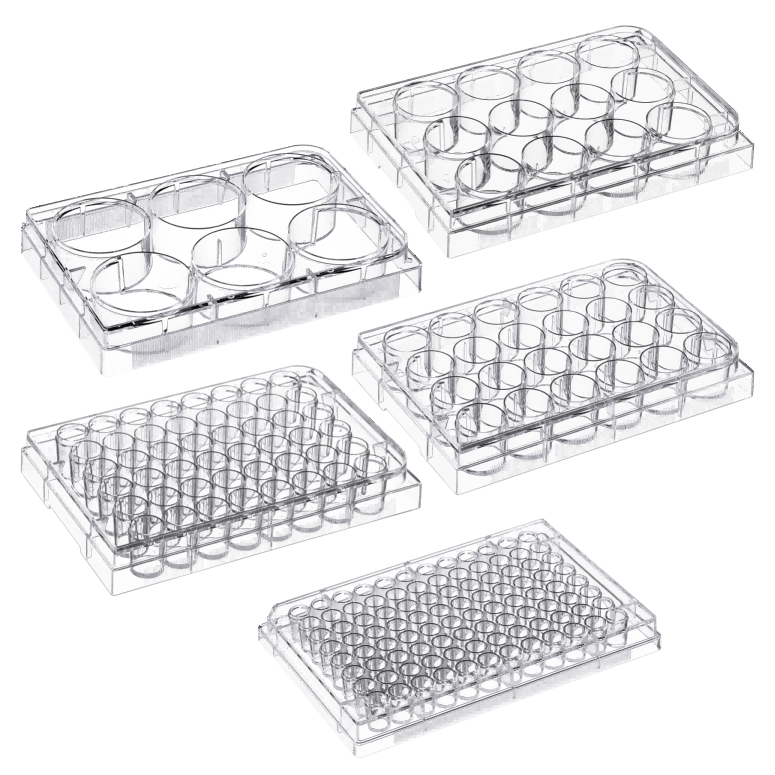
Well format selection in cell culture plates influences growth consistency through surface area availability, media volume requirements, and edge effects that can impact cellular behavior. Smaller wells in higher-density formats provide more replicates but may have different growth kinetics compared to larger wells due to surface area-to-volume ratios and boundary effects. Each well format is designed to maintain optimal growth conditions for its intended applications, ensuring that cells experience consistent environments regardless of the chosen plate configuration.
Why is surface treatment critical for cell attachment in culture plates?
Surface treatment transforms the naturally hydrophobic polystyrene surface into a hydrophilic, cell-compatible substrate that promotes protein adsorption and subsequent cellular attachment through integrin-mediated mechanisms. Without proper surface treatment, cells cannot form the focal adhesions necessary for attachment, spreading, and normal physiological function. The consistency of surface treatment across cell culture plates ensures uniform attachment characteristics and eliminates variables that could affect experimental outcomes or cell behavior patterns.
What quality control measures ensure consistent performance in cell culture plates?
Quality control for cell culture plates includes comprehensive testing of surface properties, dimensional accuracy, sterility, and biological performance using standardized cell lines and protocols. Manufacturing processes incorporate batch-to-batch consistency monitoring, surface energy measurements, and cytotoxicity assessments to verify that each plate meets strict specifications for cell culture applications. These quality measures ensure that researchers receive plates with identical performance characteristics that support reproducible experimental results and reliable cell growth outcomes.
Table of Contents
- Surface Engineering and Cellular Adhesion Mechanisms
- Material Biocompatibility and Cellular Health Maintenance
- Well Design and Growth Environment Control
- Quality Control and Manufacturing Consistency
- Optimization Strategies for Enhanced Growth Performance
-
FAQ
- What makes cell culture plates different from regular plastic dishes for supporting cell growth?
- How do different well formats in cell culture plates affect growth consistency?
- Why is surface treatment critical for cell attachment in culture plates?
- What quality control measures ensure consistent performance in cell culture plates?